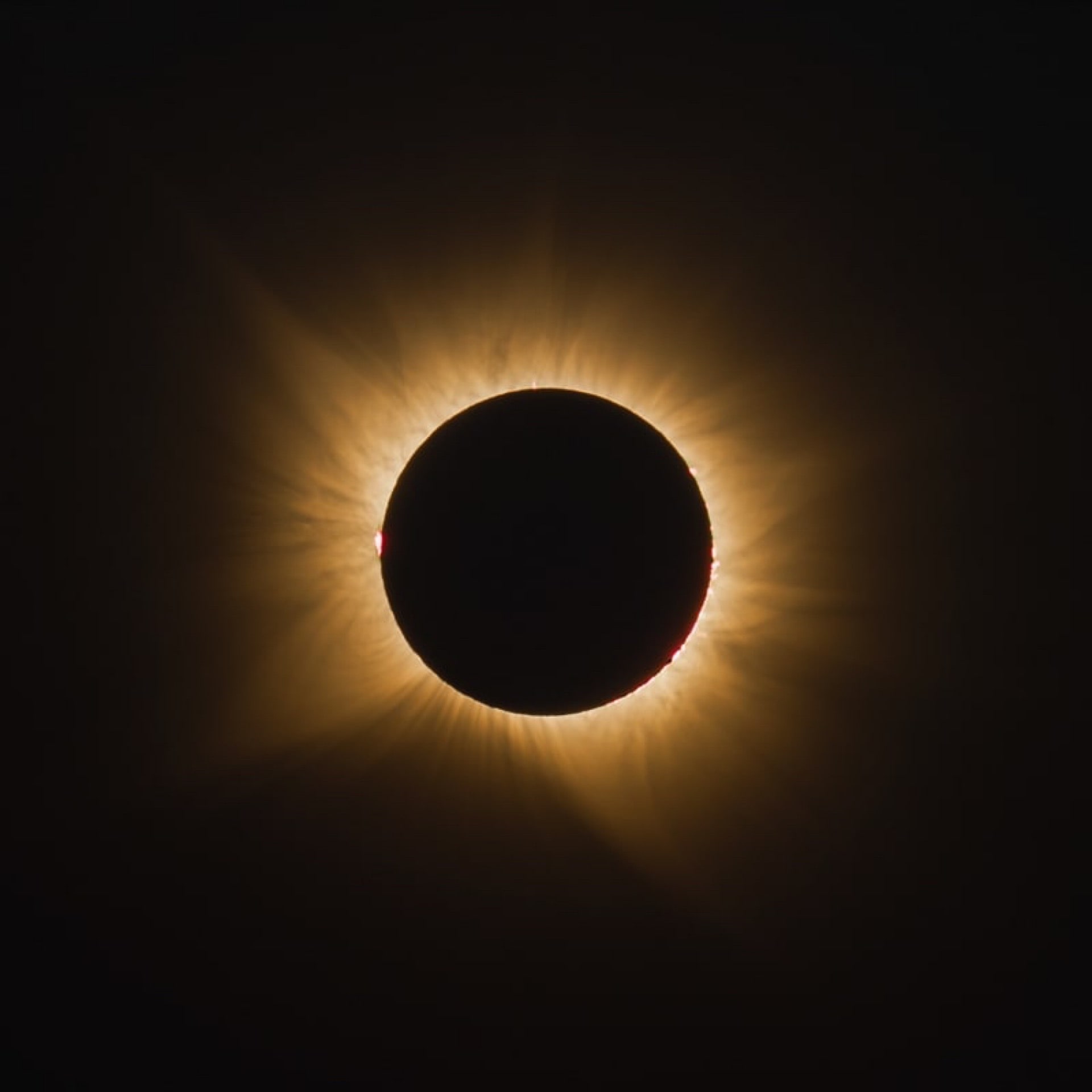
New Zealand 2028 Solar Eclipse
Price range: £2,500.00 through £9,500.00
Full details coming soon…
Description
New Zealand Total Solar Eclipse & Astrophotography Workshop 2028
6 PLACES LEFT: Photograph the total solar eclipse on 22nd July 2028 alongside New Zealand’s winter landscapes and night skies. Join Ollie Taylor and Rachel Gillespie for a photography workshop combining the Queenstown region, time within the path of totality and the protected skies of the Aoraki Mackenzie International Dark Sky Reserve.
Workshop places are available
New Zealand 2028 Solar Eclipse Photography Workshop Summary
With 14 participants, two photography tutors and support from one or two driver assistants, this workshop is built around time in the field, practical tuition and choosing locations to suit the conditions.
Location: Otago & Canterbury, New Zealand
Price: Full price £9,500 / Deposit £2,500
Date: 16th July 2028 – 28th July 2028
Eclipse Date: 22nd July 2028
Maximum Group Size: 14 (only 6 places left)
Tutors: Ollie Taylor and Rachel Gillespie
Support: Driver/assistant
Accommodation: Multiple shared holiday accommodation/single occupancy rooms unless sharing requested
Meals: Self-catered
Bathrooms: Some same-gender bathroom sharing required
BOOK YOUR PLACE
If there are spaces left, you can book your place on this photography tour below.
Any questions? Please click here to contact Ollie Taylor.
Workshop Highlights
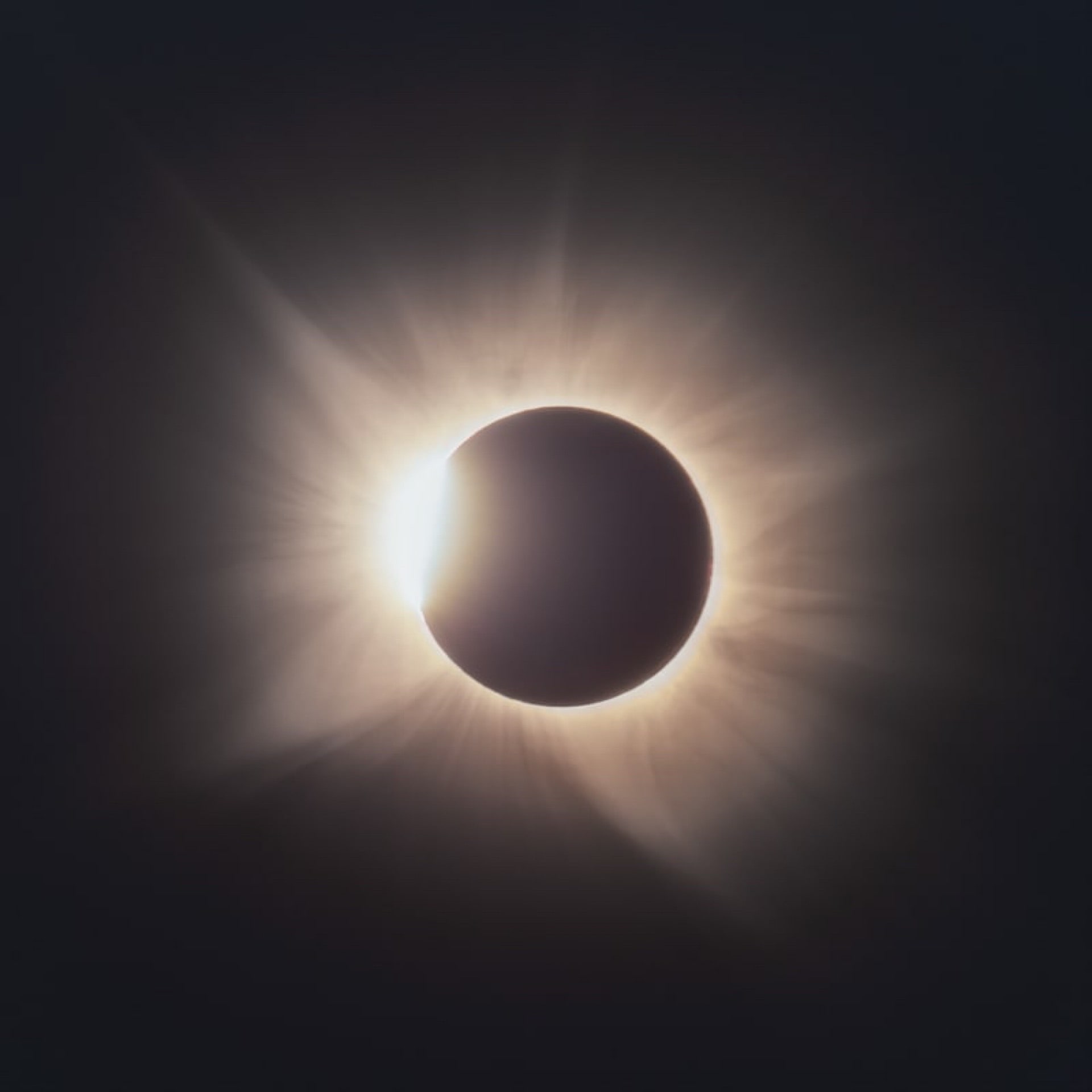
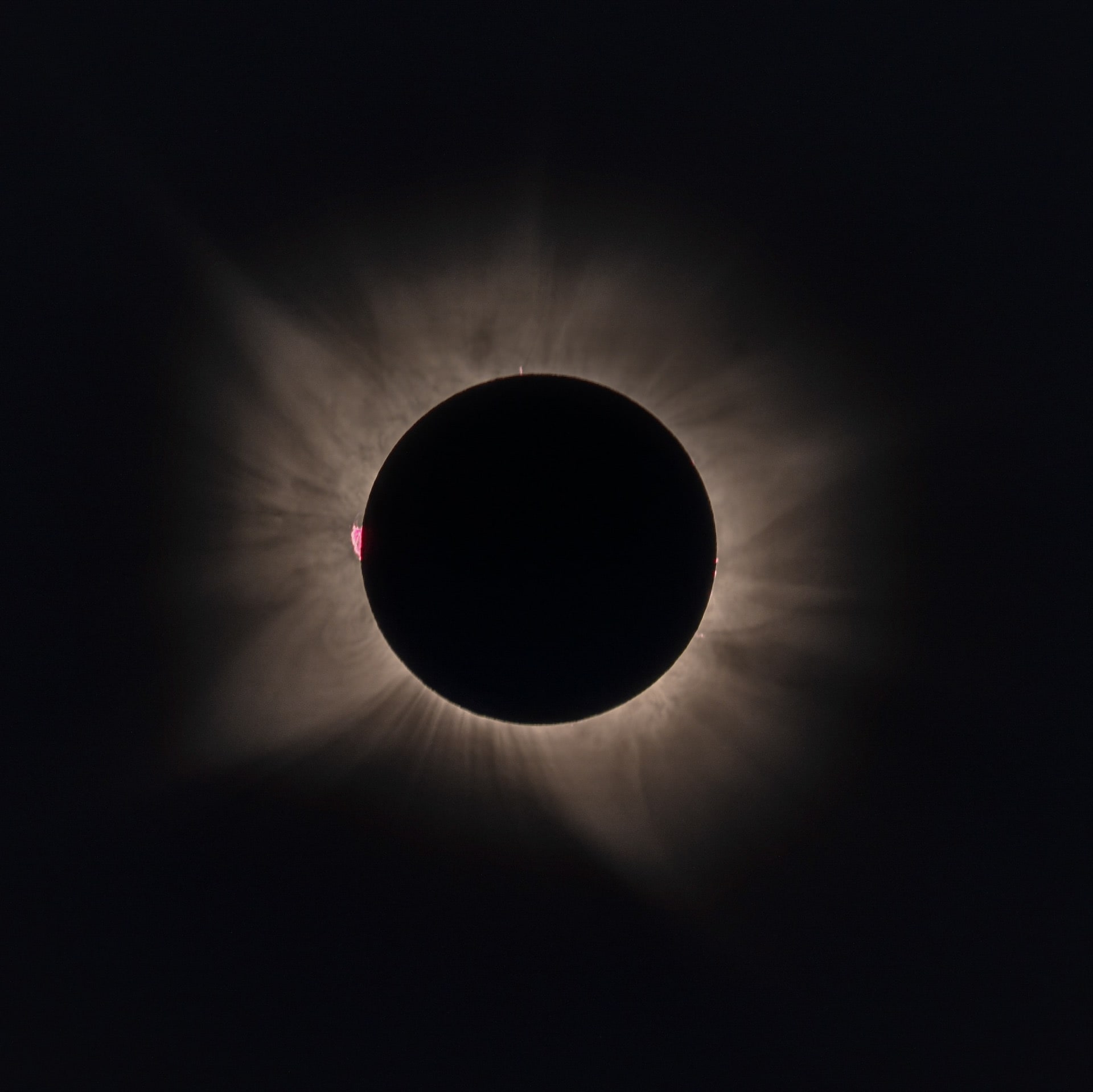
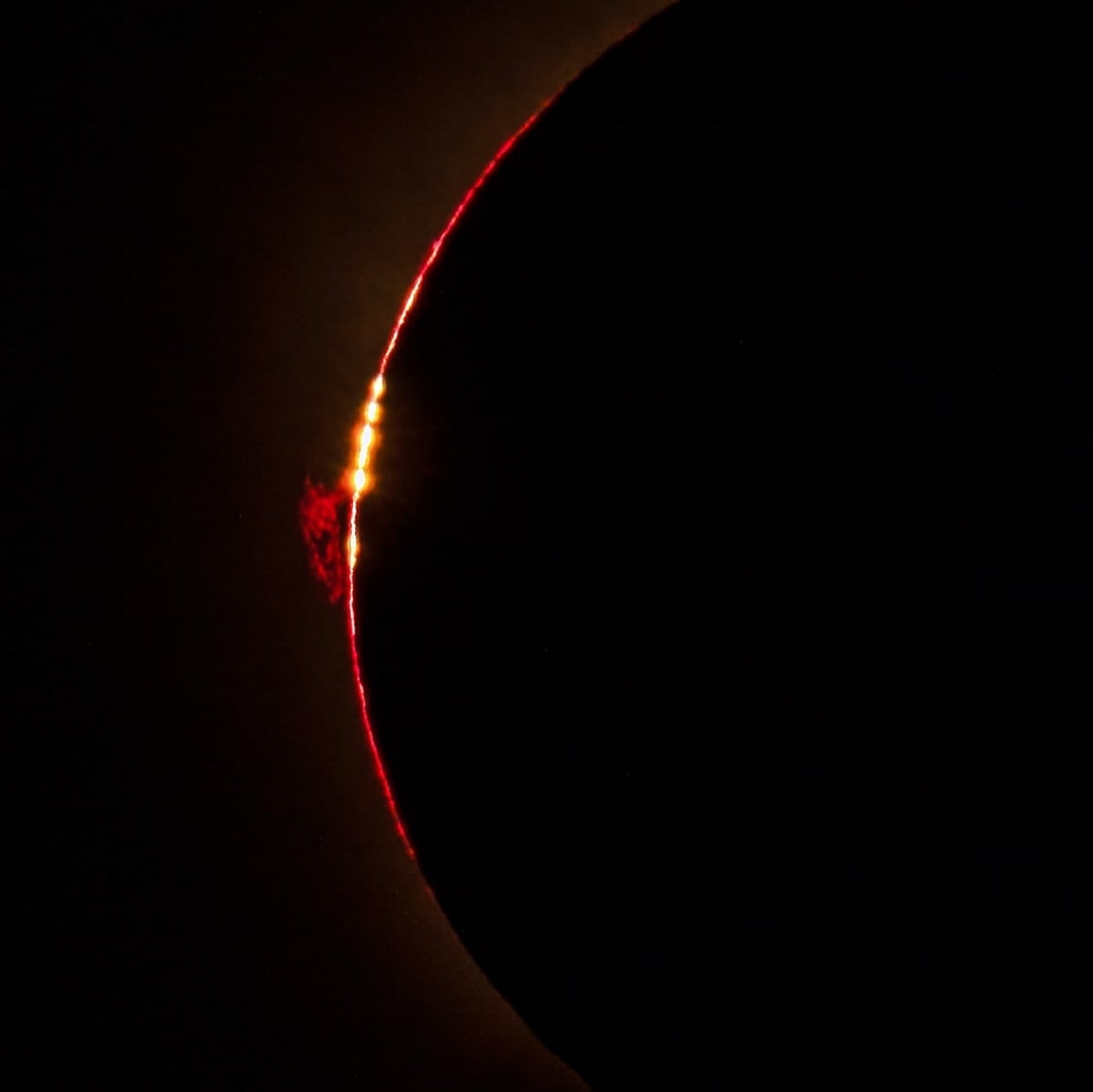
Prepare for and photograph the 2028 New Zealand total solar eclipse.
Spend four days exploring photographic opportunities around Queenstown.
Spend four days based in the region crossed by the eclipse’s path of totality.
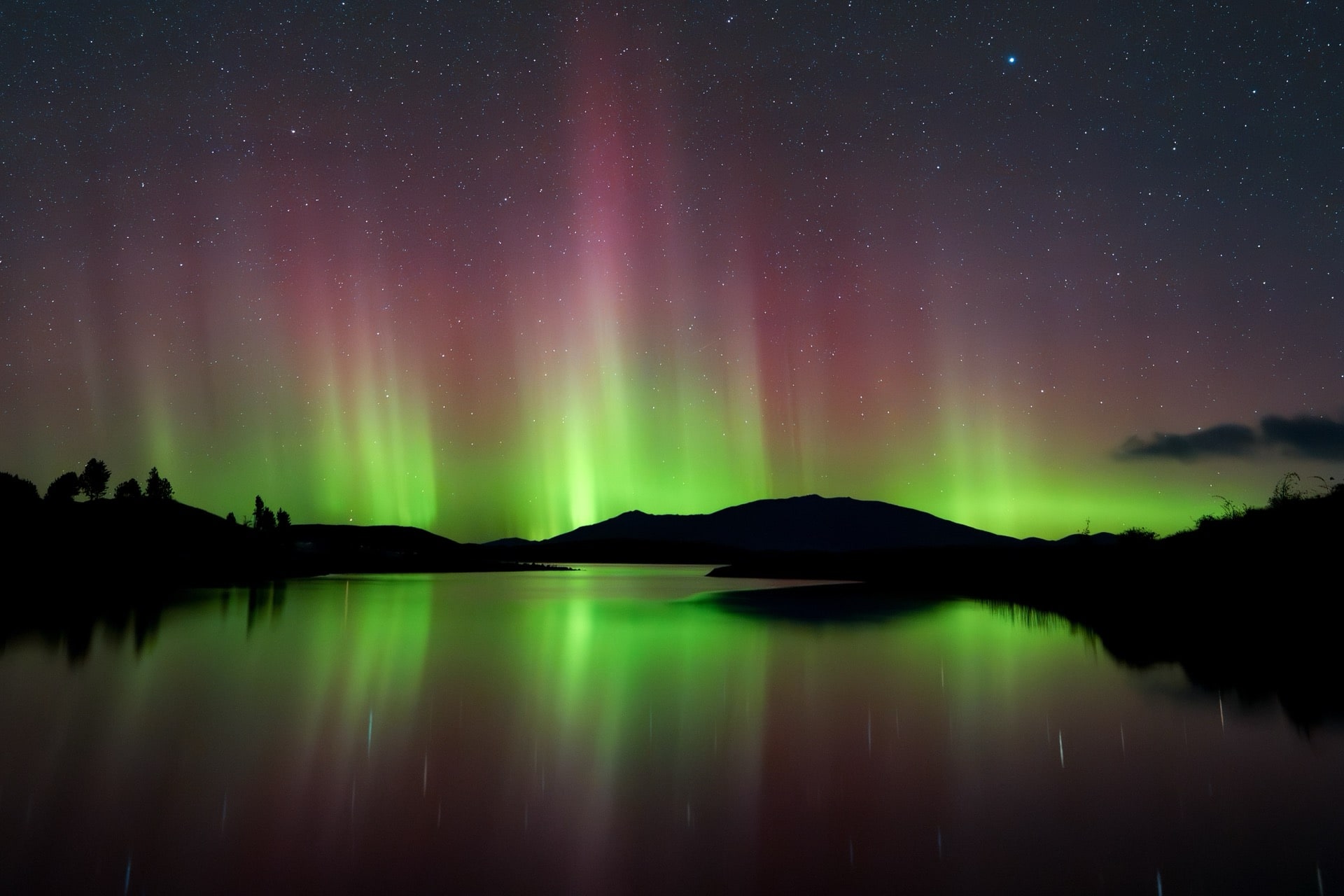
Explore the southern night sky during four days in the Aoraki Mackenzie International Dark Sky Reserve.
Follow a flexible programme, with shooting locations normally chosen the day before using the latest weather forecasts.
Stay in high-end holiday accommodation suited to late nights, flexible meals and daytime rest.
What’s Included?
Photography tuition from Ollie Taylor and Rachel Gillespie.
Luxury shared holiday accommodation for 12 nights.
All permit fees
Airport Transfers
Workshop transport between regional bases and planned photography locations.
Home study package to prepare for the solar eclipse
Group email support regarding essential equipment and “what to pack”
Solar eclipse photography planning and fieldwork tuition – pre solar eclipse.
Post – Solar eclipse post-production session
PLEASE NOTE – NO TUITION CAN BE GIVEN DURING THE ACTUAL PERIOD OF THE TOTAL ECLIPSE.
What’s Excluded?
International and domestic flights.
Meals, groceries, drinks and personal purchases.
Travel and photographic equipment insurance.
Passport, visa or other entry-authorisation costs where applicable.
Camera equipment, solar filters and personal eclipse viewers.
Winter clothing and footwear.
Optional activities outside the workshop programme.
Additional accommodation, transfers or transport outside the confirmed arrangements.
Useful Information
Landsacpe Photography
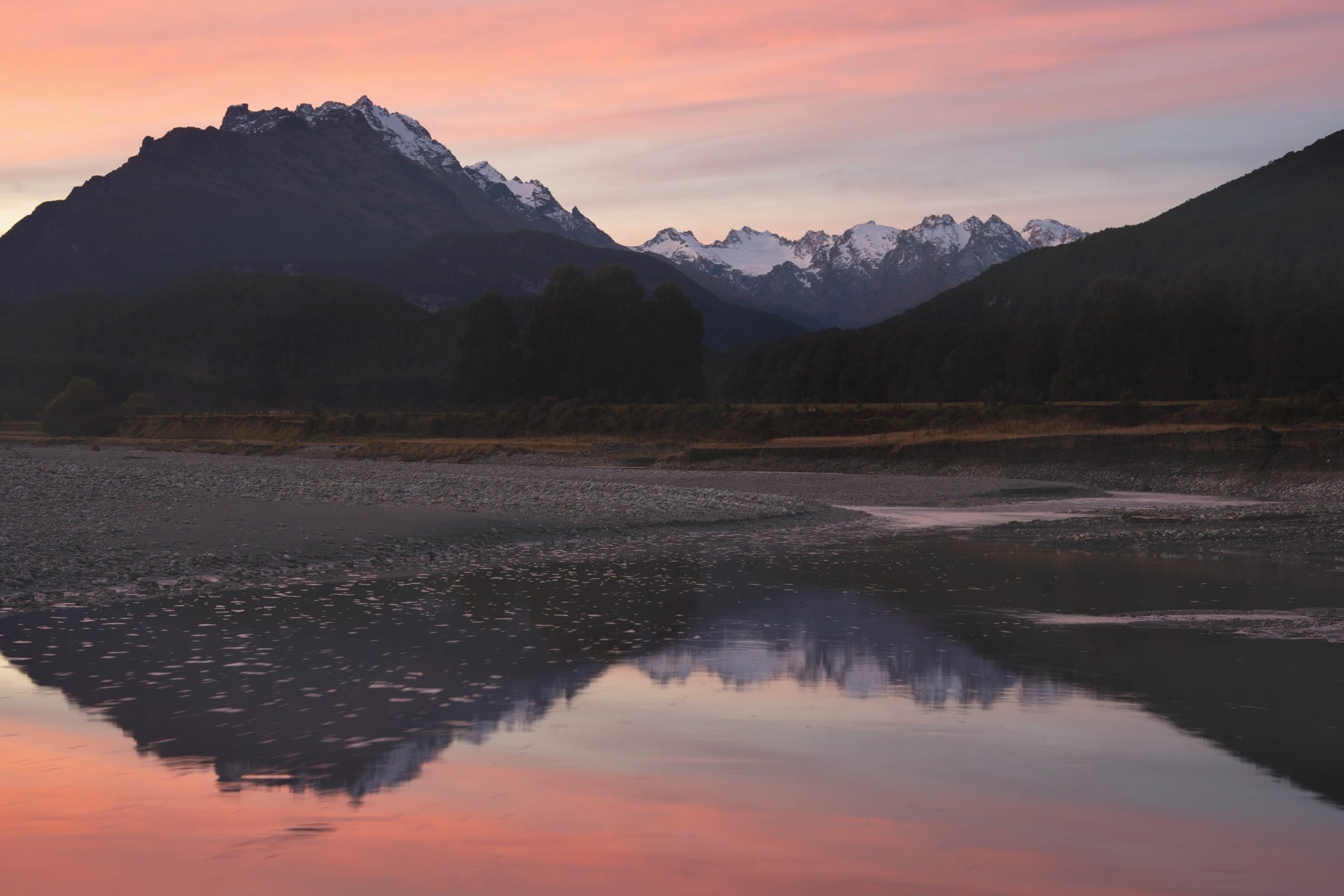
Work on composition, exposure and interpreting changing light across New Zealand’s South Island. Lakes, mountain scenery and winter conditions provide varied opportunities to develop your approach, with locations selected according to weather, access and the group’s needs.
Astrophotography
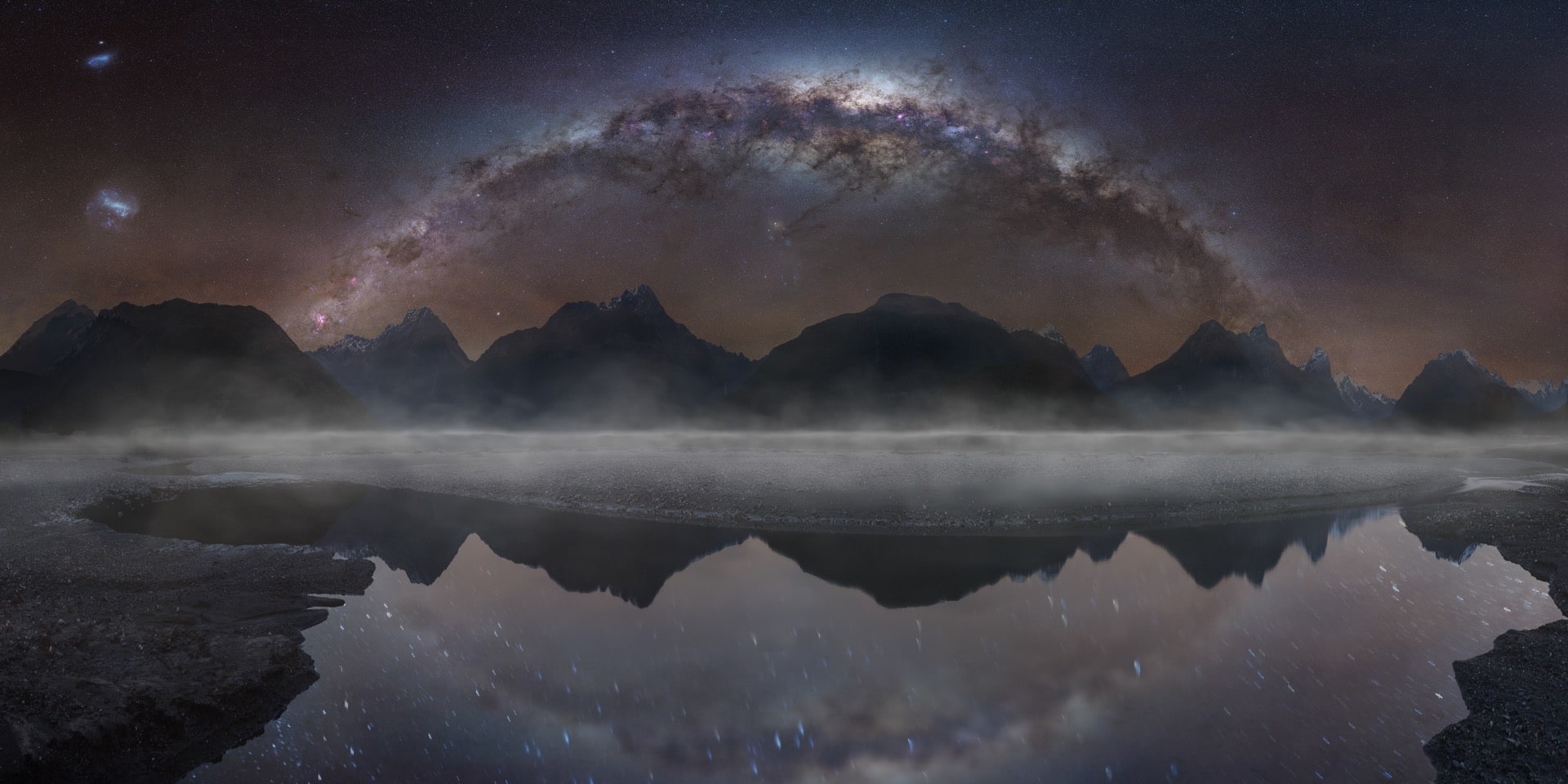
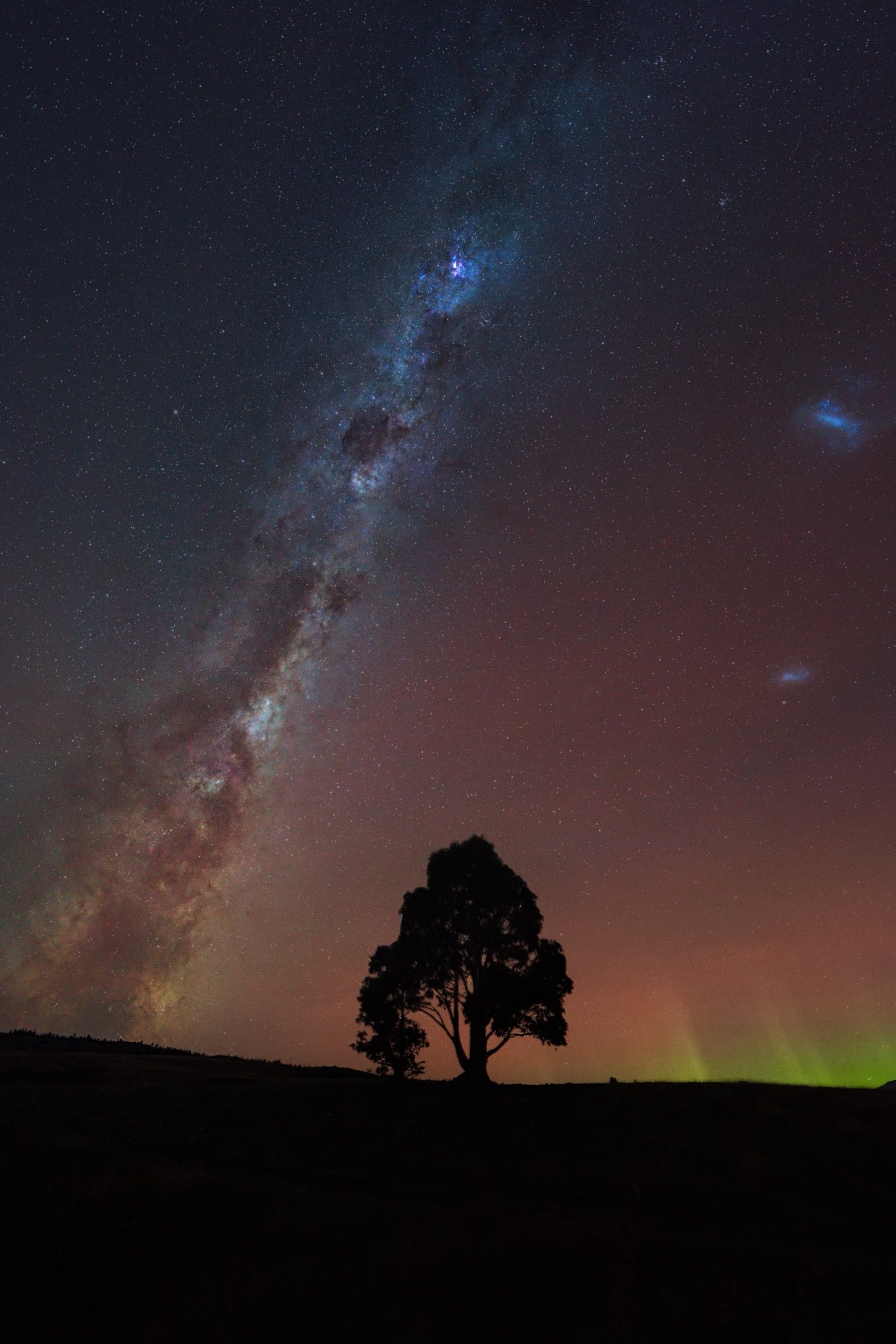
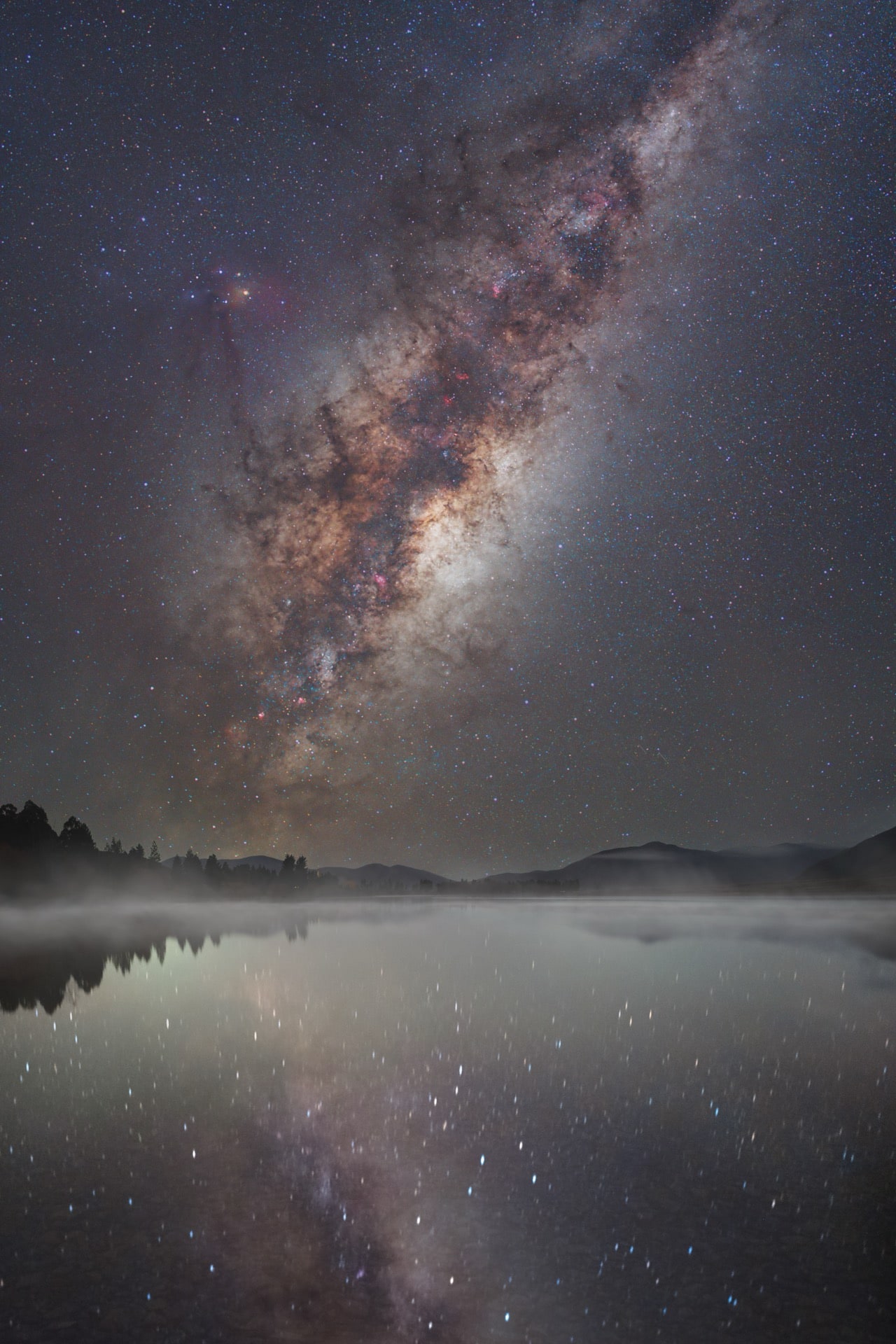
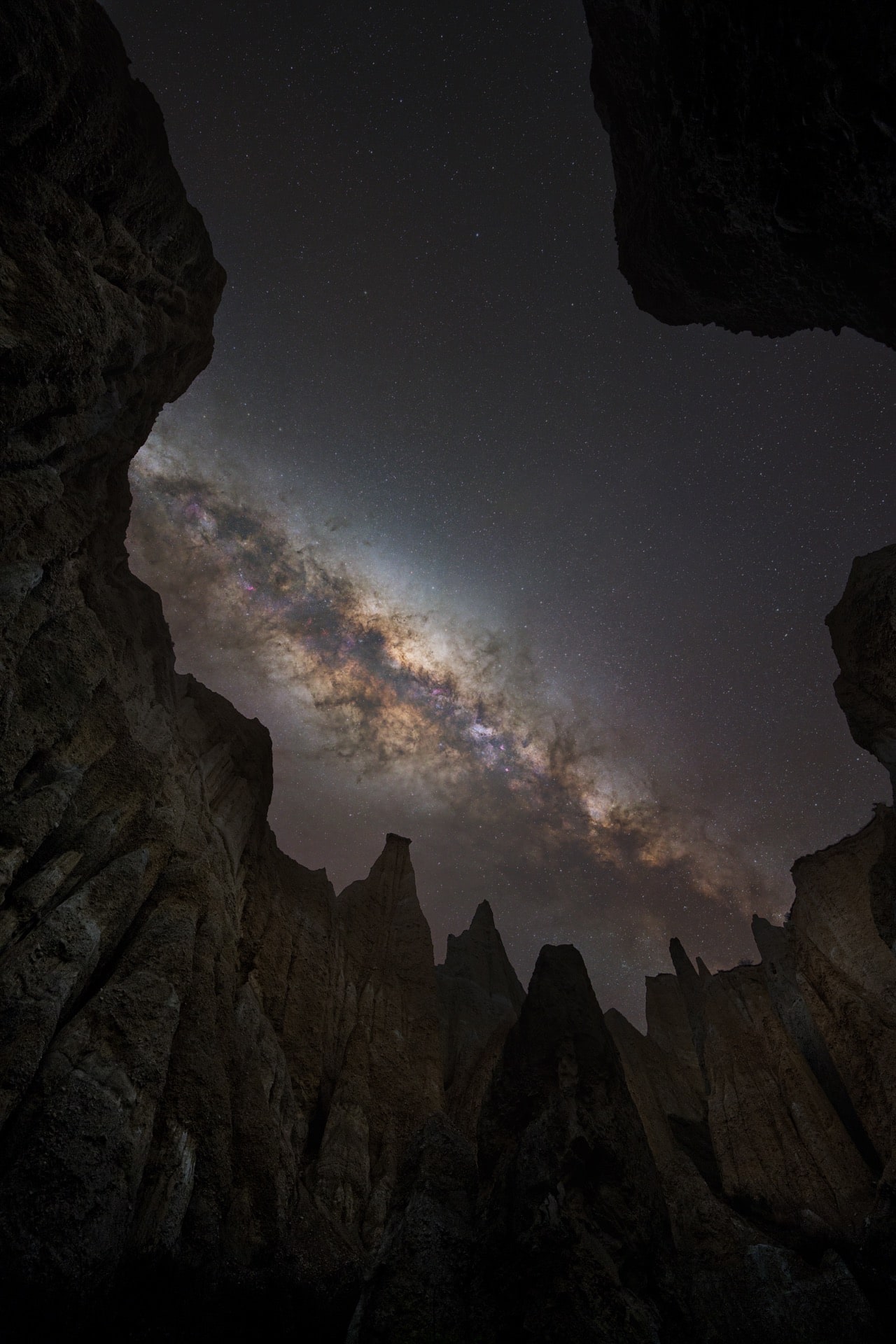
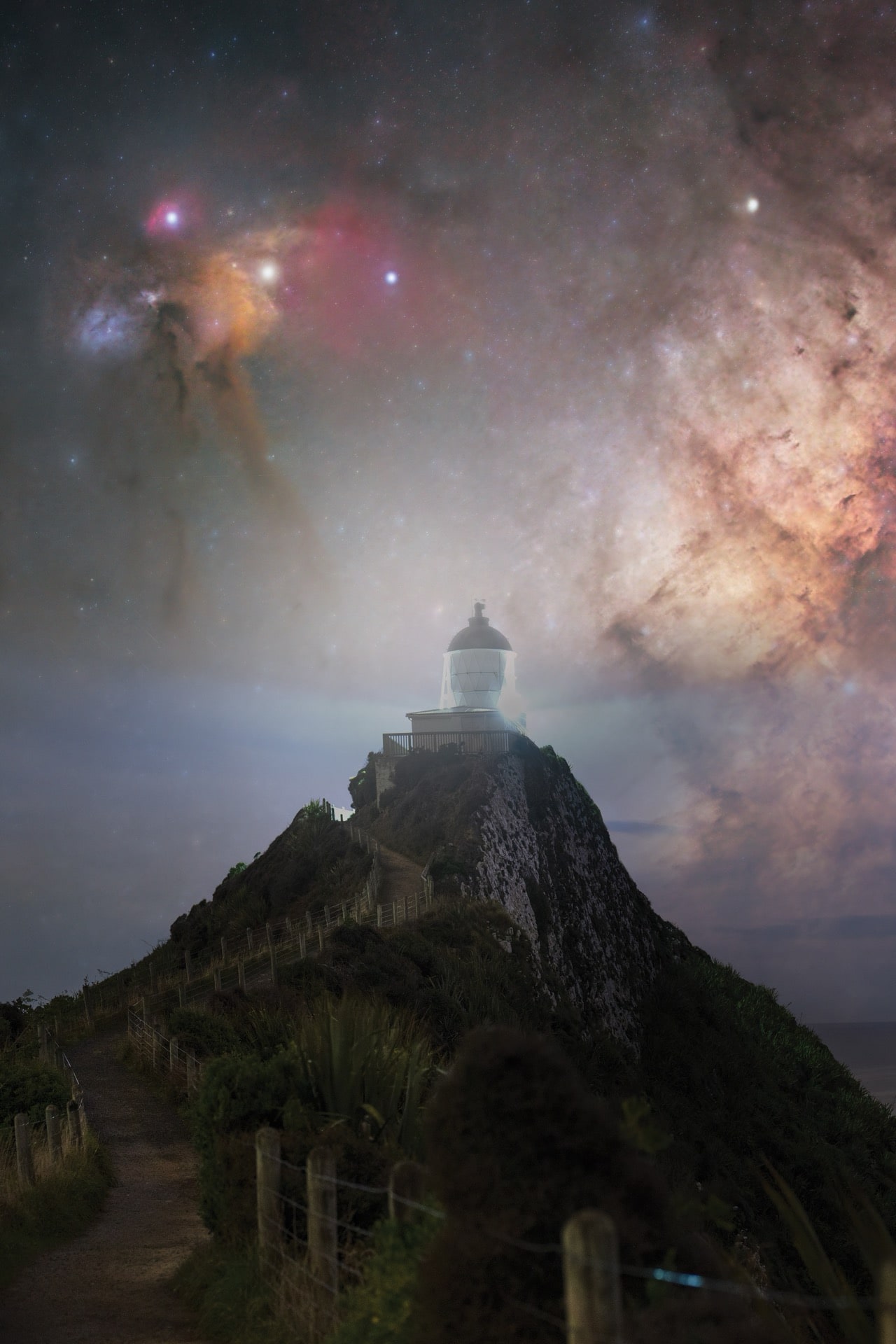
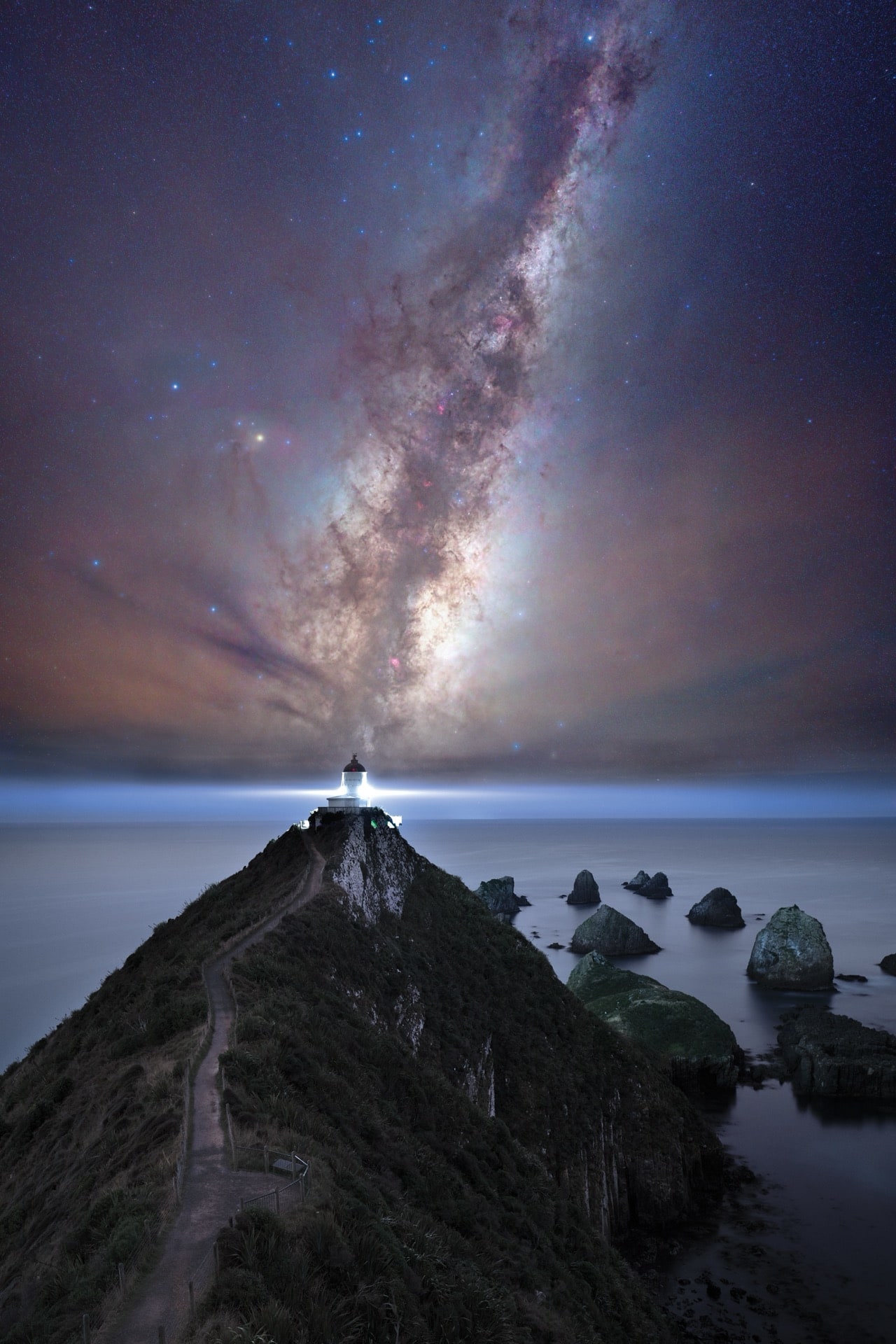
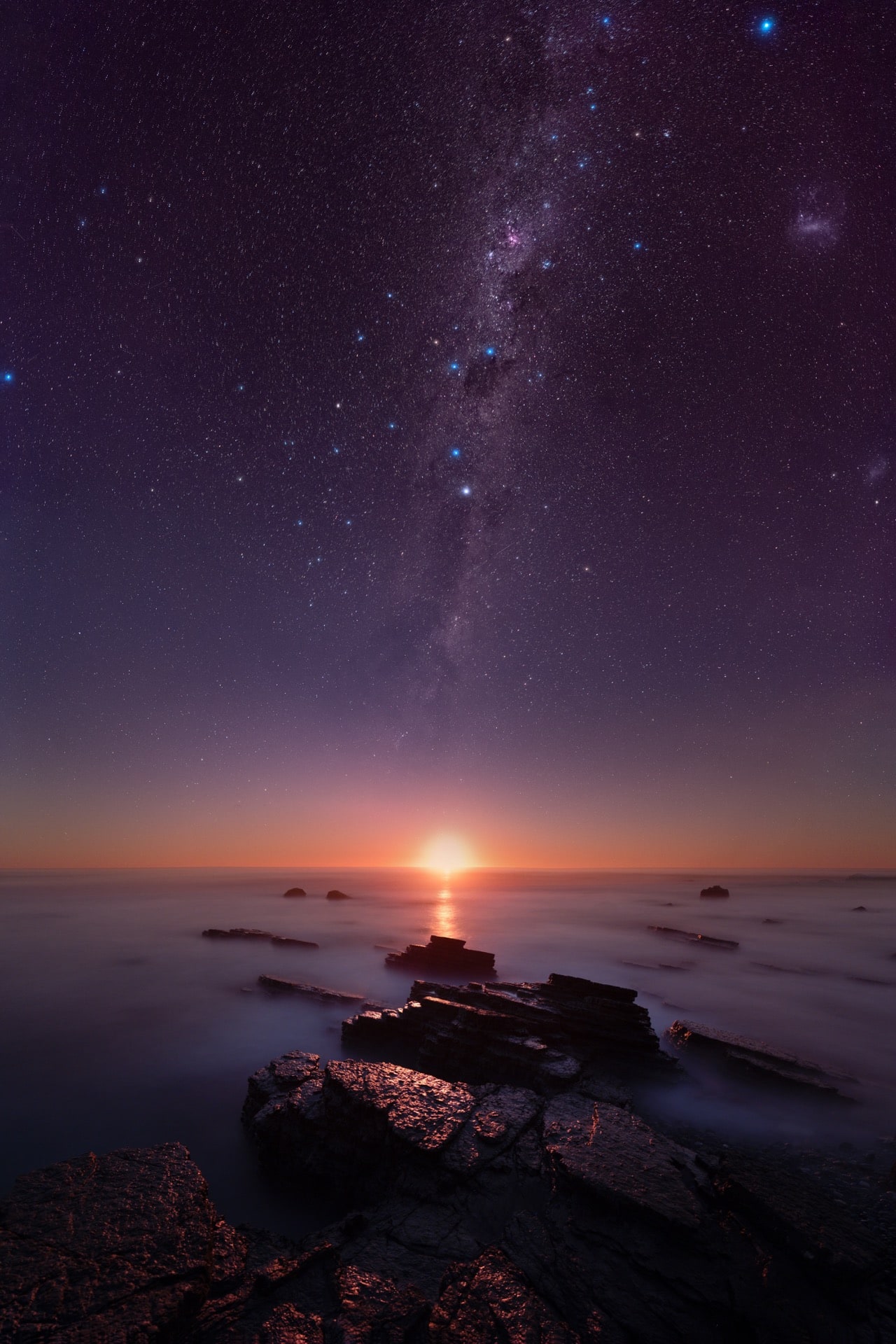
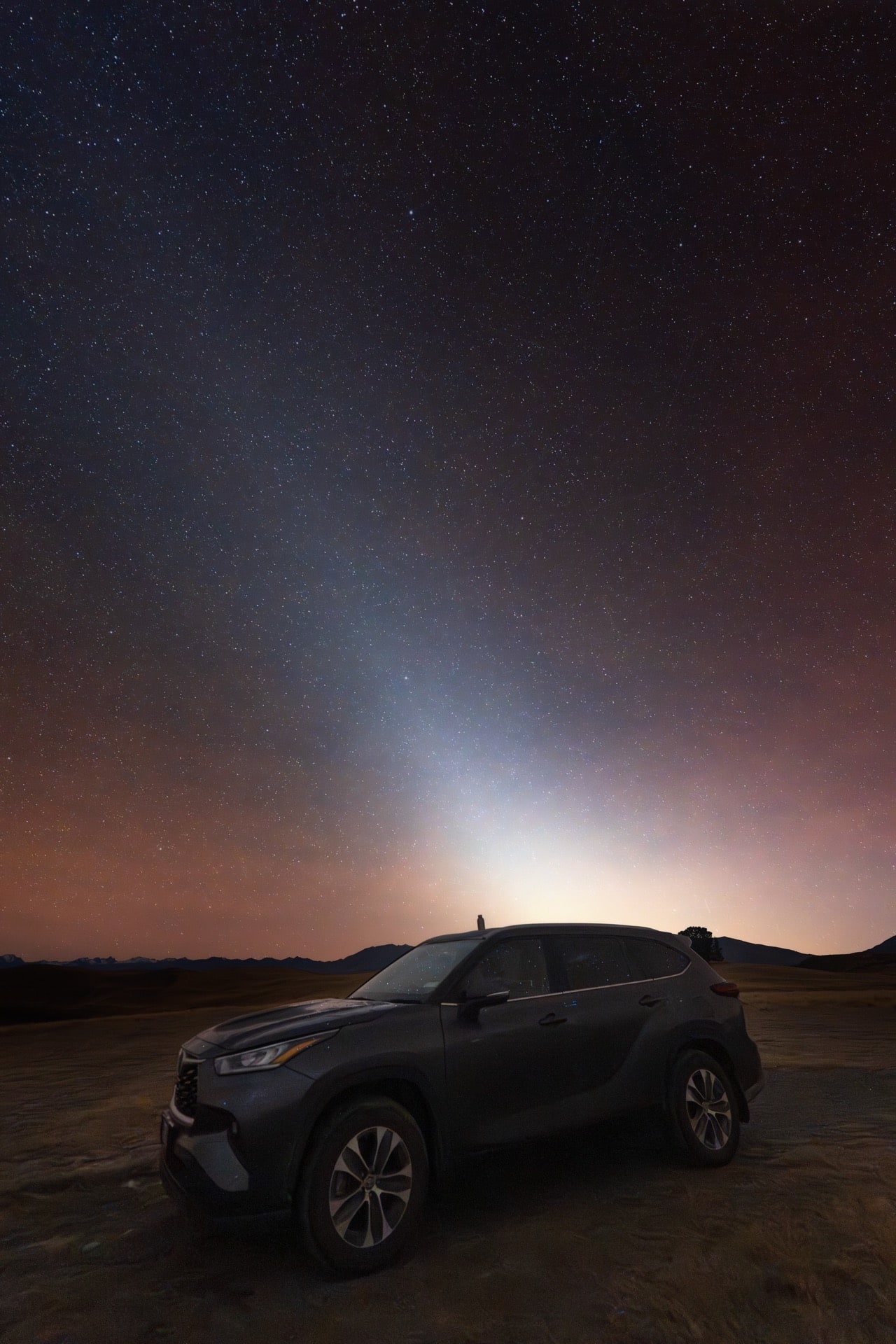
Build confidence photographing the southern night sky, from accurate focusing and exposure choices to balancing a foreground with the stars. Sessions will explore Milky Way and nightscape photography whenever conditions allow, with practical help tailored to your experience.
Eclipse Photography
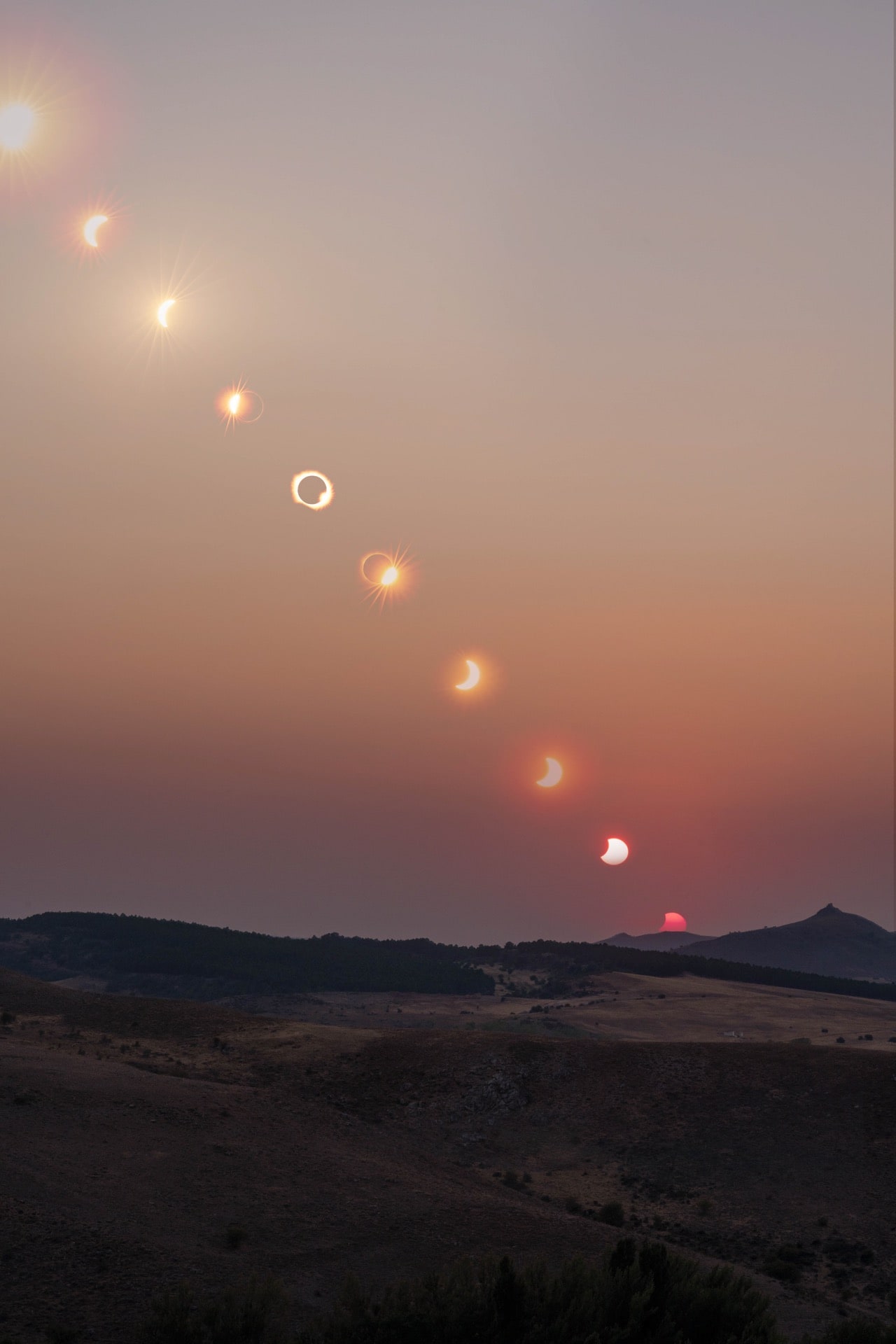
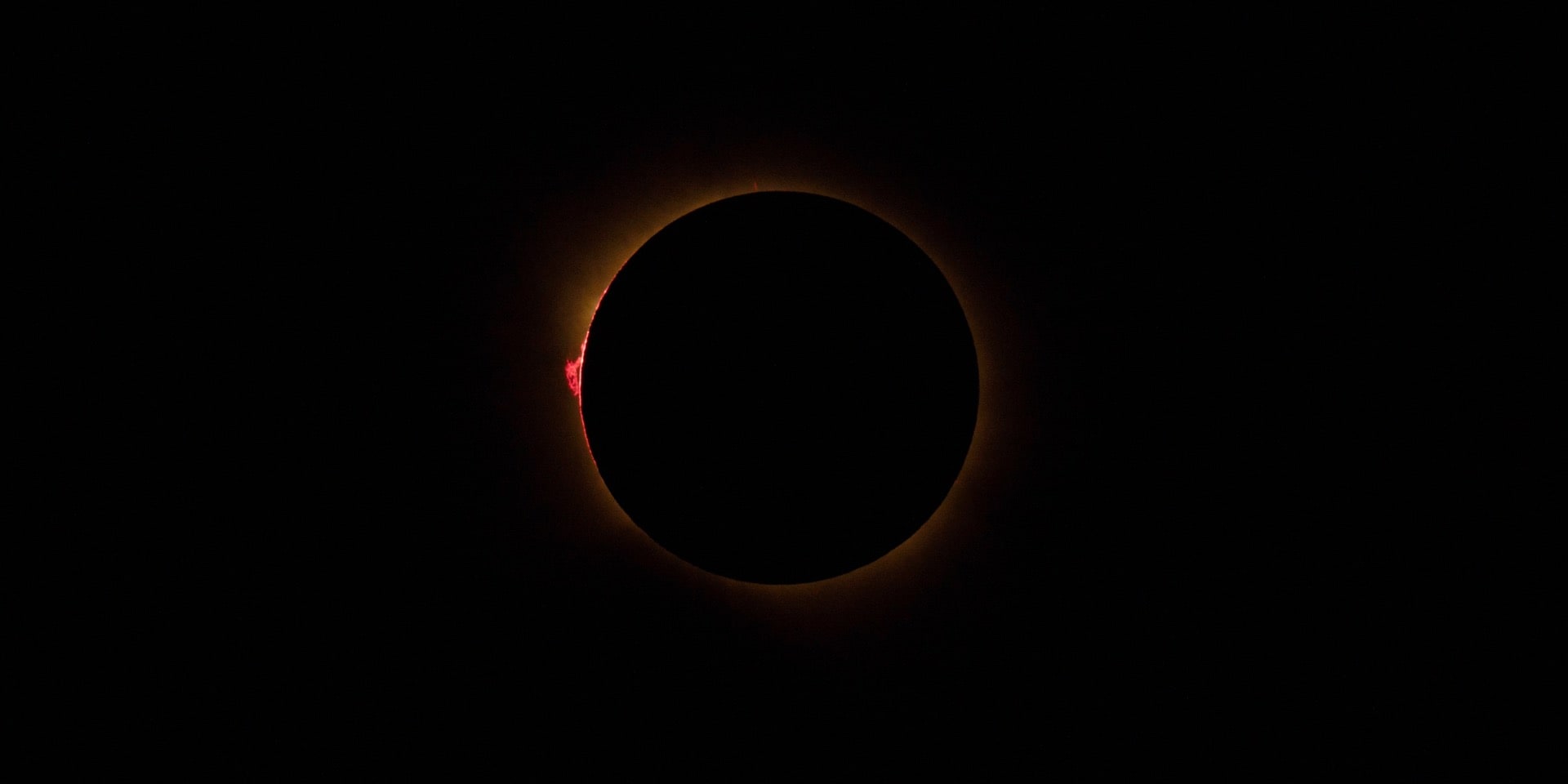
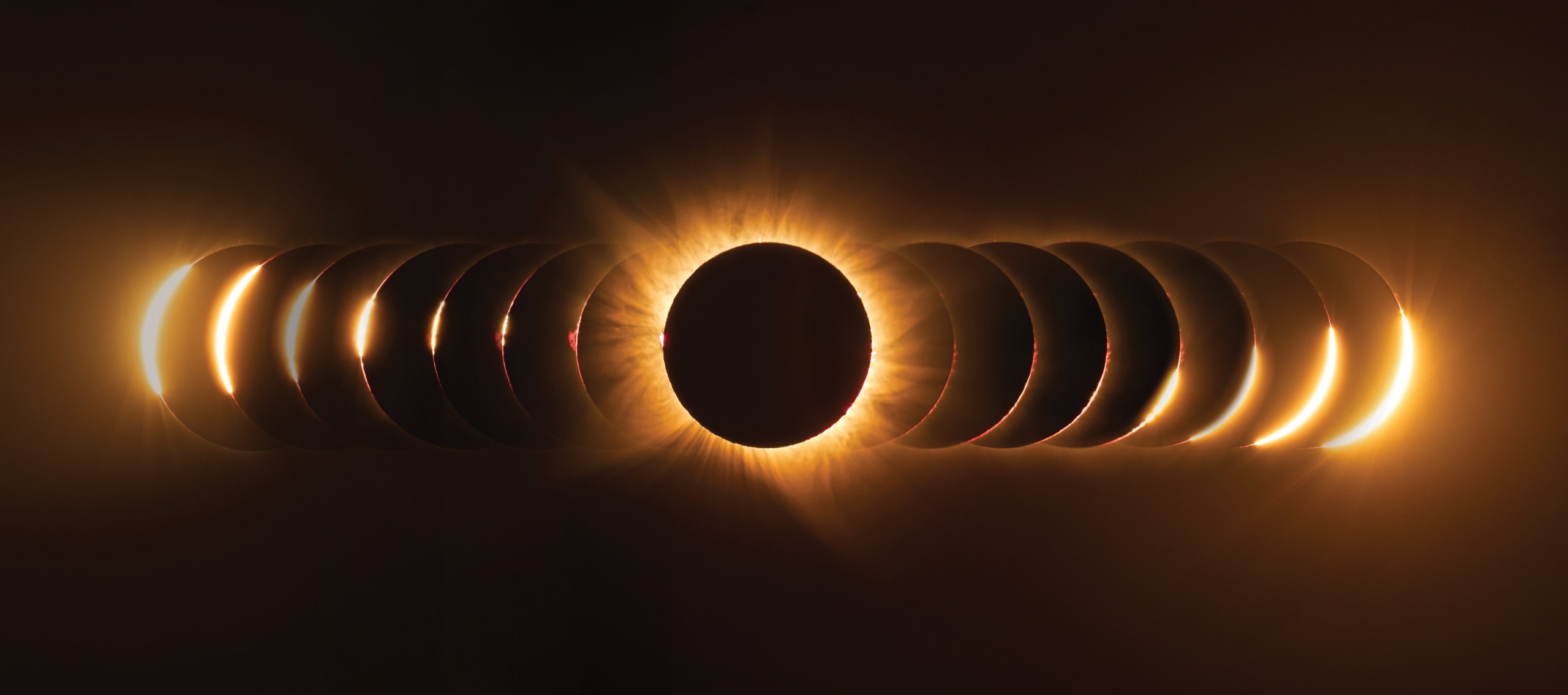
Preparation is central to photographing a total solar eclipse. We will work through equipment setup, framing, exposure planning and a manageable shooting sequence before eclipse day, helping you spend less time adjusting your camera when the event arrives.
Experience Level
Photographers at different stages are welcome. You should understand aperture, shutter speed and ISO, and be comfortable finding your camera’s main controls. Previous eclipse photography experience is not required.
Exertion Level
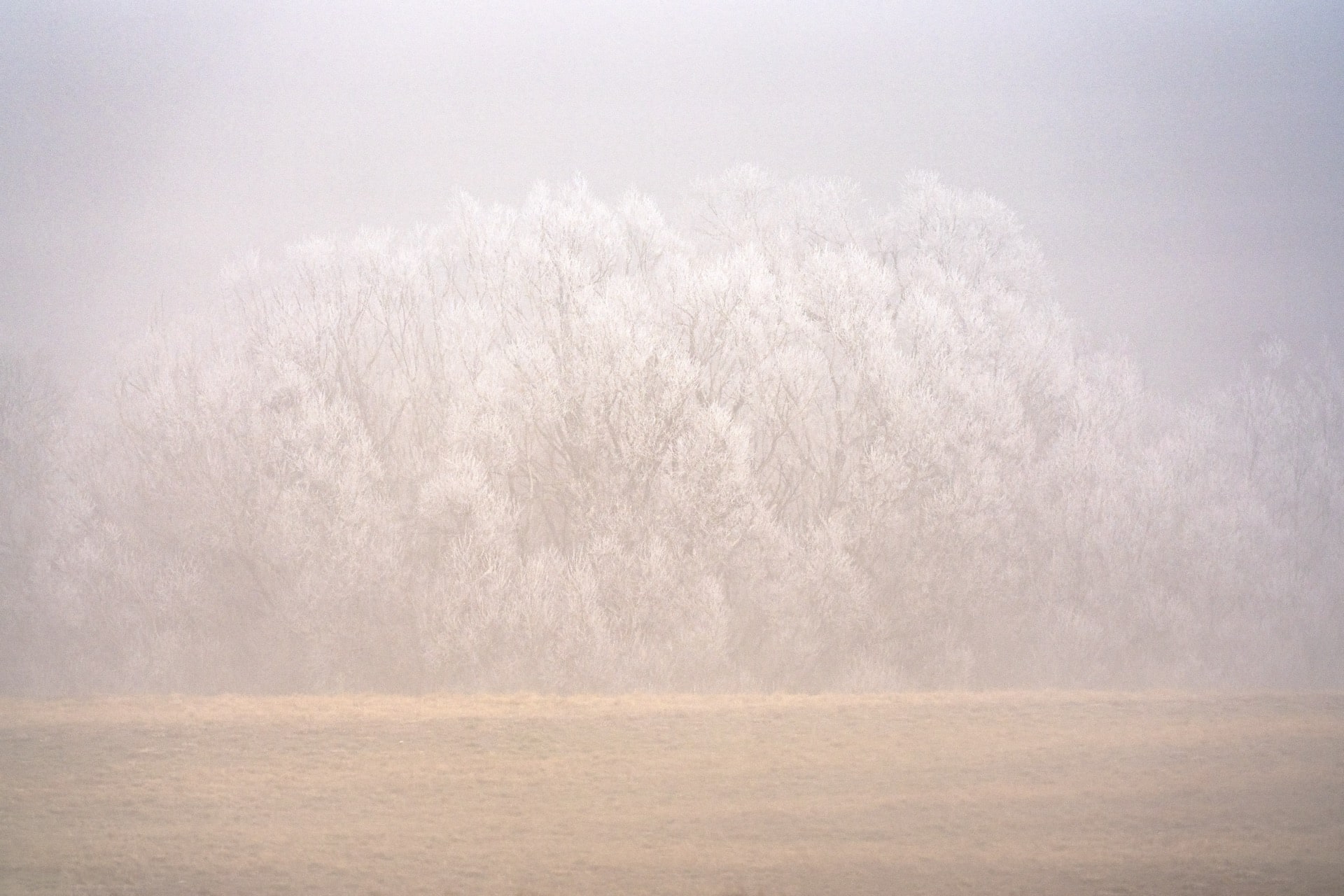
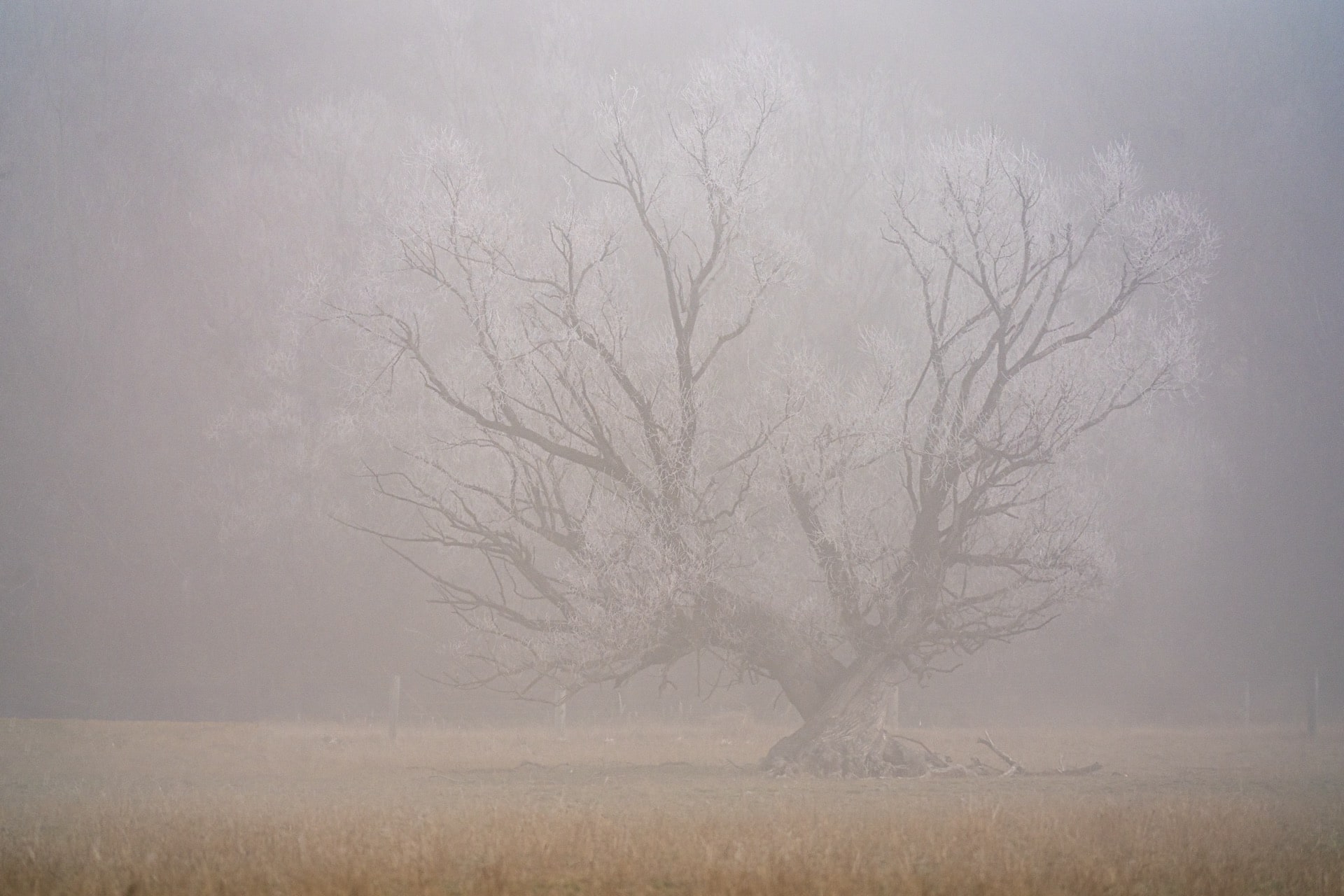
Expect long days, and late nights, cold conditions and periods outdoors carrying your camera equipment. Walking requirements will depend on the selected locations. Please discuss mobility or fitness concerns with us before booking so we can explain the likely demands.
New Zealand Eclipse & Astrophotography Overview
A total solar eclipse is the centrepiece of this New Zealand photography workshop, with a wider programme devoted to the South Island’s landscapes and night skies.
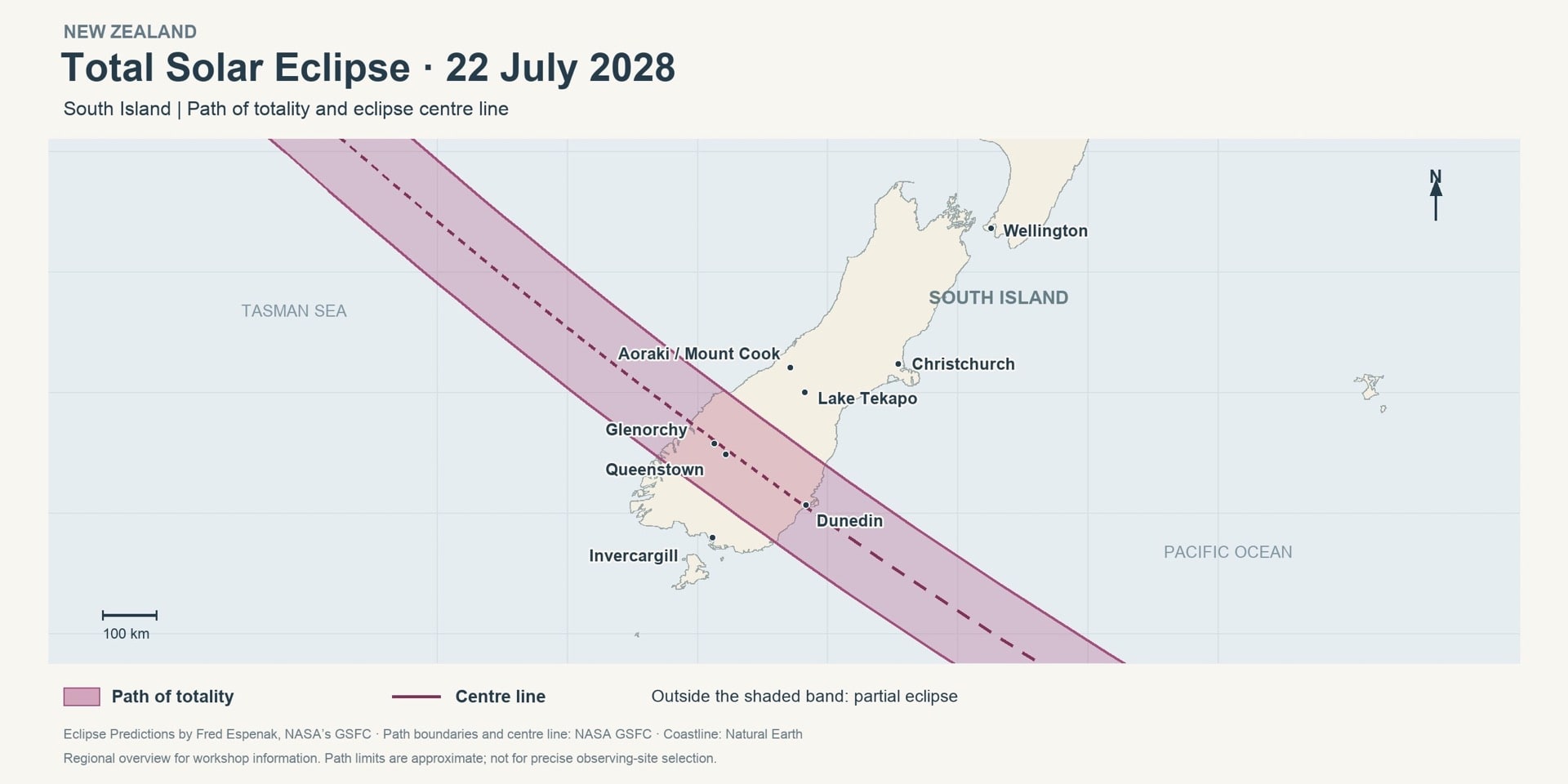
We will have several locations from east to west along the line of totality as contingency should the weather fail on one side of the island and be usable on the other.
Naturally the weather will dictate the overall outcome of the eclipse, so we have tailored in an expert led landscape and astrophotography workshop alongside the eclipse dates so you get the most out of the south island photographically during your visit.
Our regional plan gives us four days around Queenstown, four days in the totality region and four days in the Aoraki Mackenzie International Dark Sky Reserve. Together, these bases offer scope for winter landscape photography, southern hemisphere astrophotography and focused eclipse preparation.
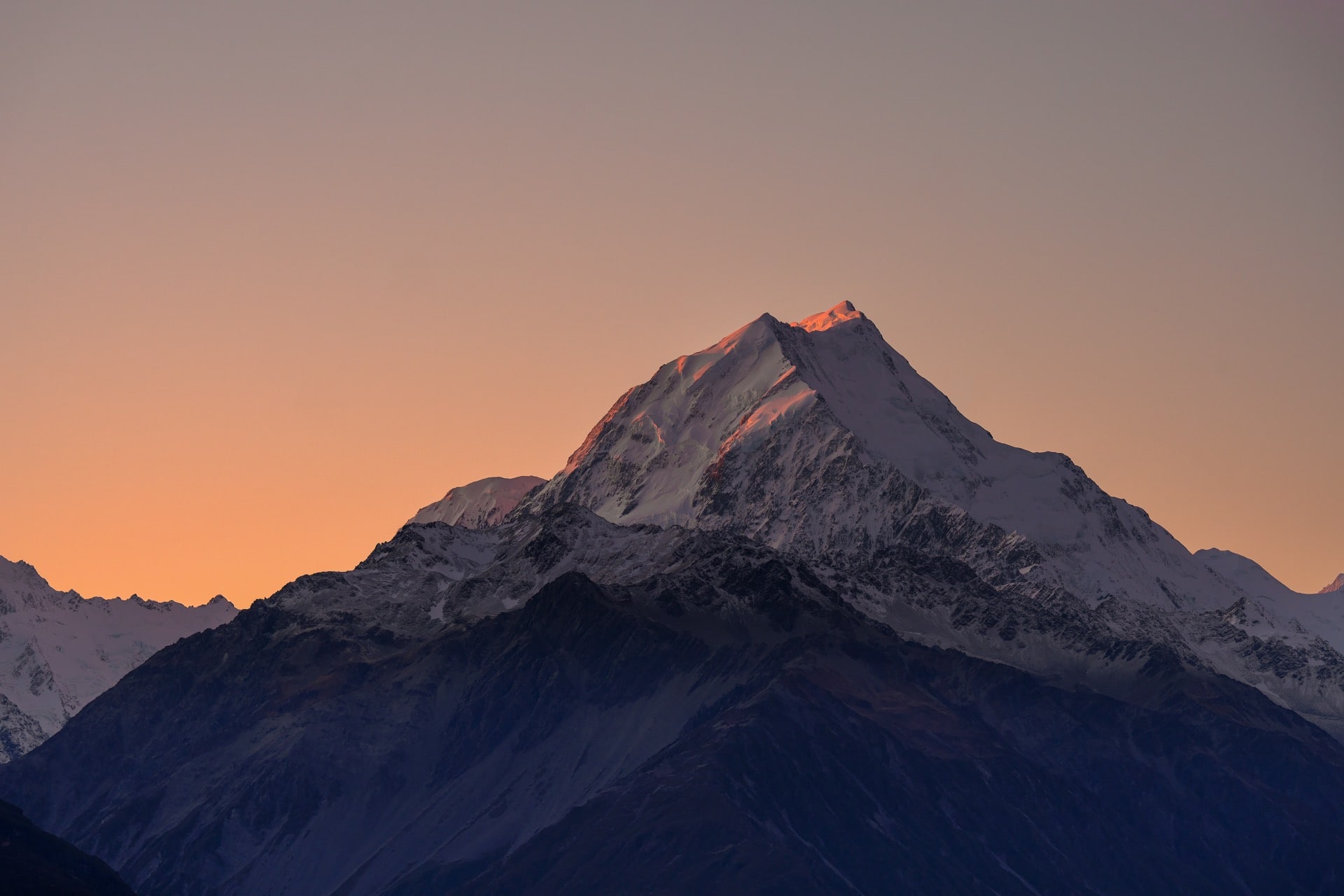
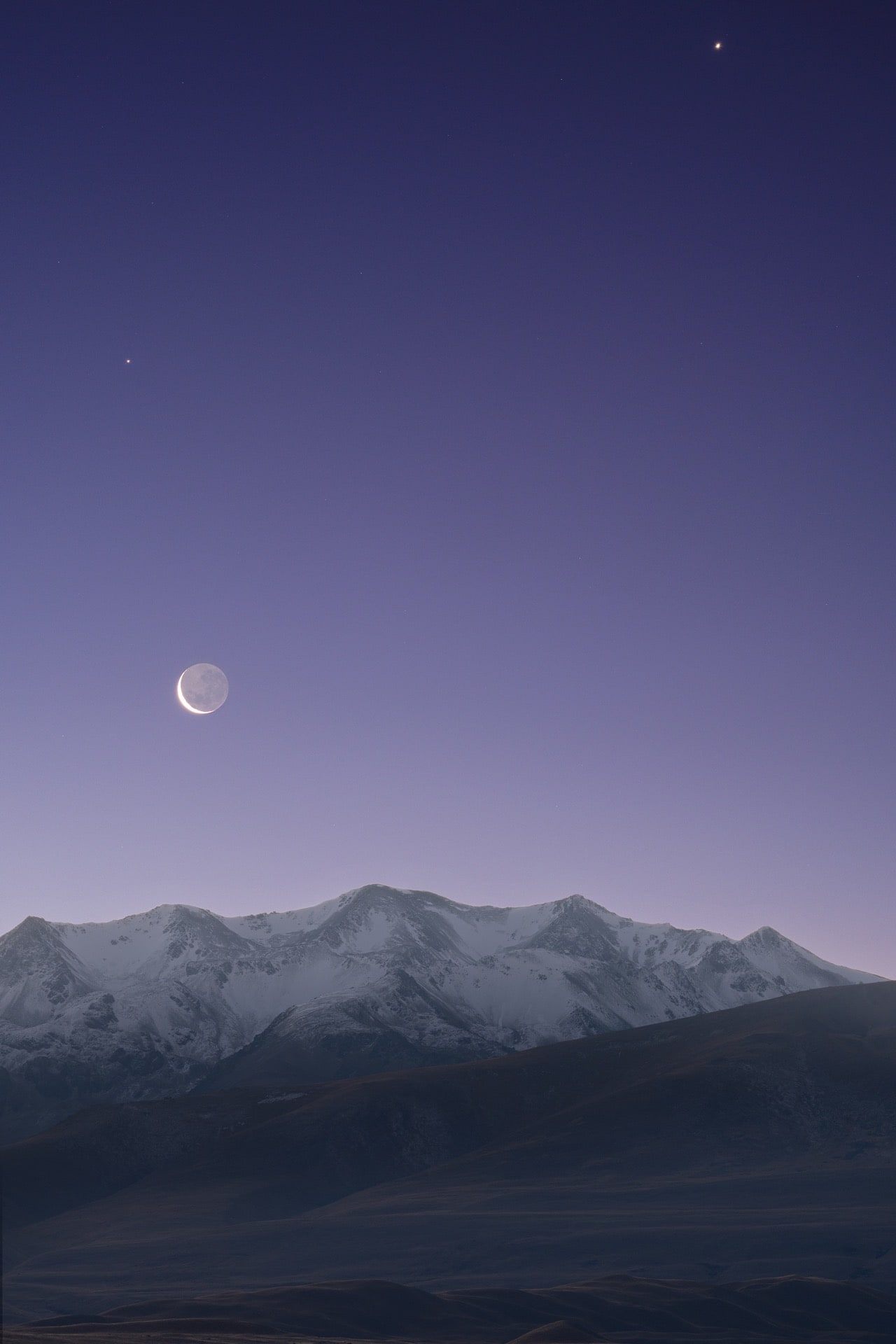
Aoraki Mackenzie’s Gold-level dark sky recognition reflects the quality of its night environment. Its mountain setting, broad landscapes and limited light pollution make it a compelling place to develop your nightscape photography.
Throughout the workshop, the aim is to make considered photographic decisions: where the light may develop, where clearer skies may appear and which locations offer a worthwhile composition in the conditions we have. We favour this approach to a rigid itinerary that has no scope to change with weather conditions.
A Flexible, Weather-Led Photography Itinerary
Our approach is simple: choose locations around the conditions. We normally plan the following day’s photography using the latest forecasts, what we have already photographed and the opportunities still ahead.
This is how we photograph personally, and it has always shaped our workshops wherever possible. It takes more planning and flexibility, but gives us the best opportunity to make productive use of the light and skies available.
Our approach is simple: choose locations around the conditions. We normally plan the following day’s photography using the latest forecasts, what we have already photographed and the opportunities still ahead.
A promising clear night may take priority, followed by a later start the next morning. Changing cloud may lead us towards a different landscape, while quieter periods provide time for image review, processing and rest.
The workshop is built around three regional bases, with four days allocated to each.
Queenstown Region — Four Days
The lakes and mountain scenery of the wider Queenstown region provide opportunities for both landscape and nightscape photography. Our opening sessions give us time to understand your photographic goals, refine techniques and explore compositions suited to the prevailing conditions.
Eclipse Totality Region — Four Days
This stage centres on the 22 July 2028 total solar eclipse, with time devoted to assessing viewing locations, checking equipment and rehearsing shooting sequences. We will select our viewing site within the path of totality, considering cloud forecasts, access, terrain and the Sun’s position. Clear skies cannot be guaranteed, but we will work hard to find the best opportunity within safe and practical reach.
Aoraki Mackenzie International Dark Sky Reserve — Four Days
Encompassing the Mackenzie Basin and Aoraki/Mount Cook National Park, this internationally recognised gold tier dark sky reserve combines protected dark skies with mountain and lake landscapes.
Our focus here is southern hemisphere astrophotography, developing Milky Way and nightscape compositions alongside daytime landscape opportunities.
The regional sequence and shooting locations remain flexible, with our time in the totality region scheduled around the eclipse. This outline describes the workshop’s framework rather than a fixed daily itinerary.
Fieldwork Equipment
Bring equipment you know how to operate confidently. A familiar setup is particularly valuable when working in darkness, cold weather or the limited time available during an eclipse. Beginner nightscape worksheets will be sent out to the group for anyone needing a refresh.
If you have any questions about fieldwork equipment for this workshop please click here to get in touch.
A camera with manual exposure controls and RAW capture.
A wide-angle lens for landscapes and nightscapes.
A standard zoom for general landscape photography.
A longer lens if you want a larger image of the eclipsed Sun 400- 1000mm.
A sturdy tripod and remote release or suitable built-in timer.
Spare batteries, memory cards and charging equipment.
A head torch with a low-output red setting.
Lens/dew heater – important!
Purpose-made solar filters appropriate to your camera and lenses.
Eclipse viewers compliant with ISO 12312-2 for direct viewing during the partial phases.
Landscape and nightscape filters such as ND’s and star glows.
Upon group introduction a detailed workshop PDF will be included within the group email trail.
Post-Production & Planning Necessities
Fieldwork and processing go together. We will provide a post-production session following the eclipse.
A laptop is optional if you prefer to concentrate on fieldwork and take notes during any demonstrations.
If you need help with astrophotography post-production, please email us and we will provide some demonstration video material.
Lightroom (please make sure this is Lightroom Classic)
Photoshop (not essential but our nightscape workflows include layer masking)
A laptop running the above ideally with a minimum of 8GB Ram
This part of the workshop can be undertaken with no laptop and note writing, though following on a laptop is recommended.
Recommended apps and websites that will be taught and demonstrated:
Space Weather Live
Live Aurora Network
Frequently Asked Questions
Some useful information about our New Zealand photography workshop.
What will I learn on the New Zealand photography workshop?
Tuition, where required, will cover landscape composition, night photography, focusing in darkness, exposure decisions, location planning and eclipse preparation. Image review and processing sessions will help connect decisions made in the field with the finished photograph.
When is the 2028 total solar eclipse in New Zealand?
The eclipse takes place on 22 July 2028, with totality occurring in the late afternoon along a path crossing parts of the South Island. Exact timings and the duration of totality depend on the viewing location.
Is seeing the eclipse guaranteed?
No. Cloud can obscure the eclipse even from a location within the path of totality. We will use forecasts to inform our planning and viewing-site decisions, subject to safe travel, access and the time available.
Why don’t you publish a fixed daily location itinerary?
New Zealand’s remote landscapes, low population density and commitment to limiting light pollution make it an exceptional destination for stargazing and astrophotography. The country currently has 10 internationally accredited Dark Sky Places: two reserves, three parks, four sanctuaries and one community, protecting outstanding night skies across both islands.
A highlight of our workshop is the Aoraki Mackenzie International Dark Sky Reserve, awarded Gold-tier recognition for its exceptionally dark skies. Covering 4,367 square kilometres of the Mackenzie Basin and Aoraki/Mount Cook National Park, it combines protected southern skies with mountain and lake landscapes—an extraordinary setting for Milky Way and nightscape photography.
Why do you use holiday accommodation?
Our schedule may include very late finishes and daytime rest. High-end holiday homes give us shared living space, kitchen facilities and greater control over our daily routine, helping us organise meals and recovery around photography.
Will I share a room or bathroom?
Accommodation is shared, and some same-gender bathroom sharing is required. Bedrooms are single occupancy unless sharing is requested on booking. Bathroom arrangements are a mix of personal en-suites, and same gender sharing. Please contact us about any specific requirements.
What are the meal arrangements in New Zealand?
The workshop is self-catered. Participants buy their own groceries and prepare meals using the accommodation’s kitchen facilities. You may choose to cook individually or together, with cafés and restaurants an option when the location and photography schedule permit, or the weather dictates it. Food and drinks are at your own expense.
Do we need photography permits?
Many locations require permission for organised workshop access or commercial group activities. Rachel Gillespieand her astro and photographic consortium holds one of the largest portfolios of DOC (conservation land) permits amongst photography organisations on the South Island, alongside relevant guiding requirements. We will only visit areas we are legally allowed to undertake our activities.
What clothing should I bring?
Pack for winter photography and extended periods standing outdoors. Bring warm layers, waterproof and windproof outerwear, suitable footwear, a warm hat and gloves that allow you to operate your camera. Further clothing guidance will be provided in the workshop PDF at group intro.
Do I need special equipment for the eclipse?
Yes. Photographing the partial phases requires suitable solar filtration securely fitted to the front of the camera lens. Direct viewing requires appropriate eclipse glasses.
Eclipse glasses do not make it safe to look through an unfiltered camera, telescope or binoculars. Filters may be removed only during confirmed totality, when the Sun’s bright face is completely covered, and must be replaced before it reappears. We will cover safe preparation prior to eclipse day.
Will we photograph every night?
The schedule will respond to cloud, wind, safe access and the need for rest. We will use suitable opportunities for night photography, with landscape photography filling in the gaps. Clear skies cannot be guaranteed.
Can I join without landscape or astrophotography experience?
Yes, provided you understand exposure controls and can operate your camera fluently, you will also need a basic understanding of landscape photography beginner settings and filters, alongside completing some home study that we will send out to you. Please contact us if you are worried about your experience level before booking your place.
Accommodation
We use high standard shared holiday accommodation with single bedroom occupancy chosen to support the working pattern of a landscape and astrophotography workshop.
Kitchen facilities make self-catering practical, while shared living areas provide space to relax between sessions. Our accommodation schedule will allow for late returns and daytime rest following night photography.
Some same-gender bathroom sharing is required.
Travel Information
Arrival & Departure
Arrival Airport – Queenstown
Transfers at 15:00
Departure Airport – Christchurch
Transfers reaching the airport between 13:00/14:00
Workshop Transport
The workshop team includes driver assistants to support travel and logistics alongside Ollie Taylor and Rachel Gillespie in minivans.
Further Information
Please contact us before booking if you have questions about equipment, accommodation, dietary needs or the physical demands of winter photography.
As outlined on the workshop page and in the FAQs, clear skies for the eclipse cannot be guaranteed. We will monitor weather forecasts closely and use our experience to select the best viewing location within safe and practical reach.
Deposits are non-refundable.
Final balance payments are due 150 days prior to the workshop commencing.
Alternative Workshops & Dates
Can’t make these dates? Take a look at our other workshops.
Workshop places are available
Join the New Zealand 2028 Eclipse Workshop
With 14 participants, two photography tutors and support from one or two driver assistants, this workshop is built around time in the field, practical tuition and choosing locations to suit the conditions.
Location: Otago & Canterbury, New Zealand
Price: Full price £9,500 / Deposit £2,500
Date: 16th July 2028 – 28th July 2028
Eclipse Date: 22nd July 2028
Maximum Group Size: 14
Tutors: Ollie Taylor and Rachel Gillespie
Support: Driver/assistant
Accommodation: Multiple shared holiday accommodation/single occupancy rooms unless sharing requested
Meals: Self-catered
Bathrooms: Some same-gender bathroom sharing required
BOOK YOUR PLACE
If there are spaces left, you can book your place on this photography tour below.
Any questions? Please click here to contact Ollie Taylor.