TRAVEL ARTICLE
Ilulissat
ARTICLE BY OLLIE TAYLOR ON 22 May 2026

ARTICLE INDEX
Intoduction
Arctic photography in Ilulissat. At the edge of one of the most productive glaciers on Earth, Ilulissat sits beside a fjord filled with colossal icebergs, offering some of the most dramatic winter photography anywhere in Greenland.
The town’s name comes from the Greenlandic word Iluliaq, meaning iceberg. Ilulissat literally translates as “Icebergs”, an appropriate name for a place where towering glacial giants dominate the horizon.
For photographers visiting West Greenland, Ilulissat is often considered the single best location to experience icebergs, Arctic light and Northern Lights all in one place, making it a winter wonderland for photography expeditions.
Ilulissat is also one of the key destinations featured in our guide to Photographing West Greenland in Winter.
Photography Highlights
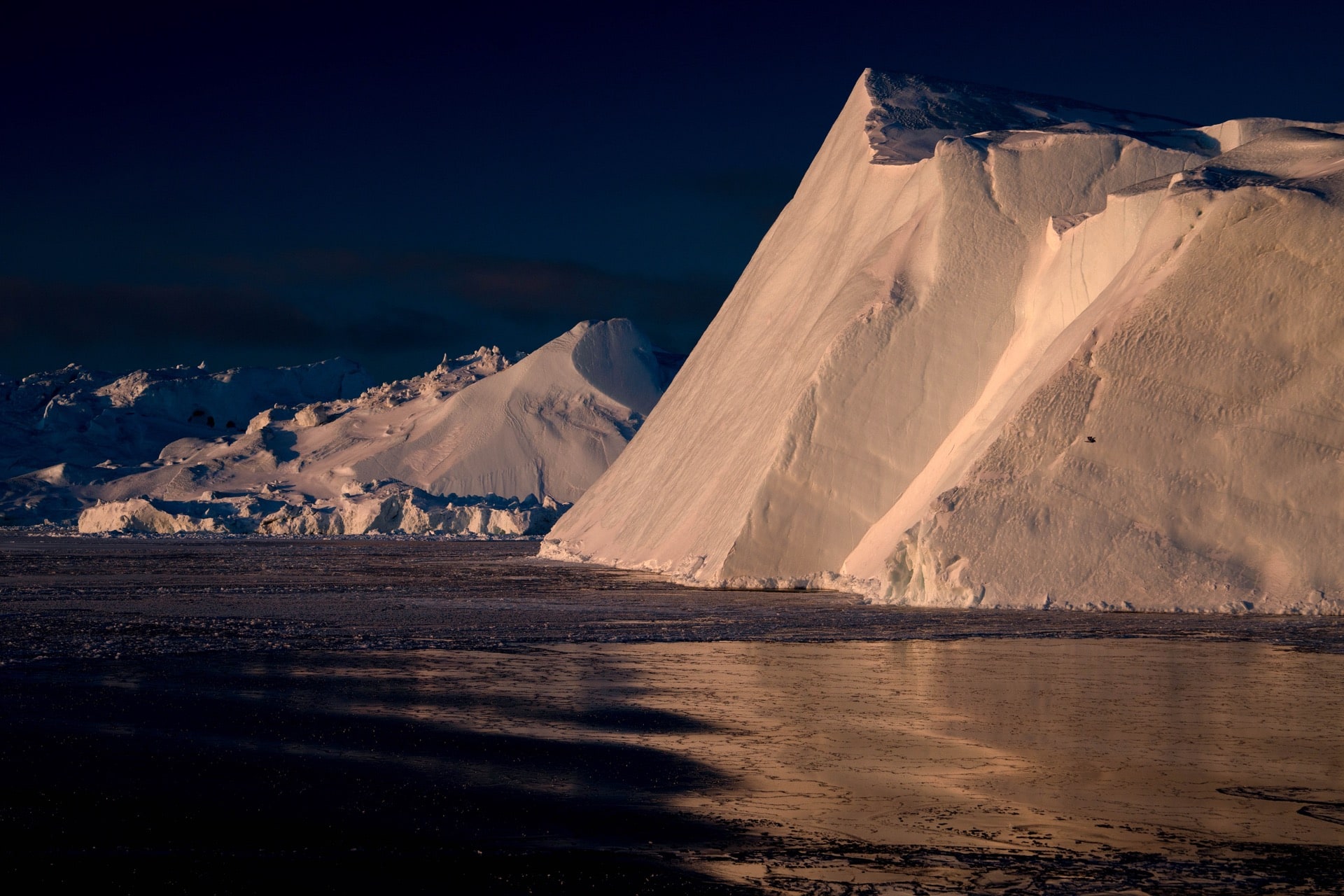
Icebergs from the Ilulissat Icefjord photographed from the coast
Cruise Ilulissat Fjord on an Ice cutter to photograph the icebergs
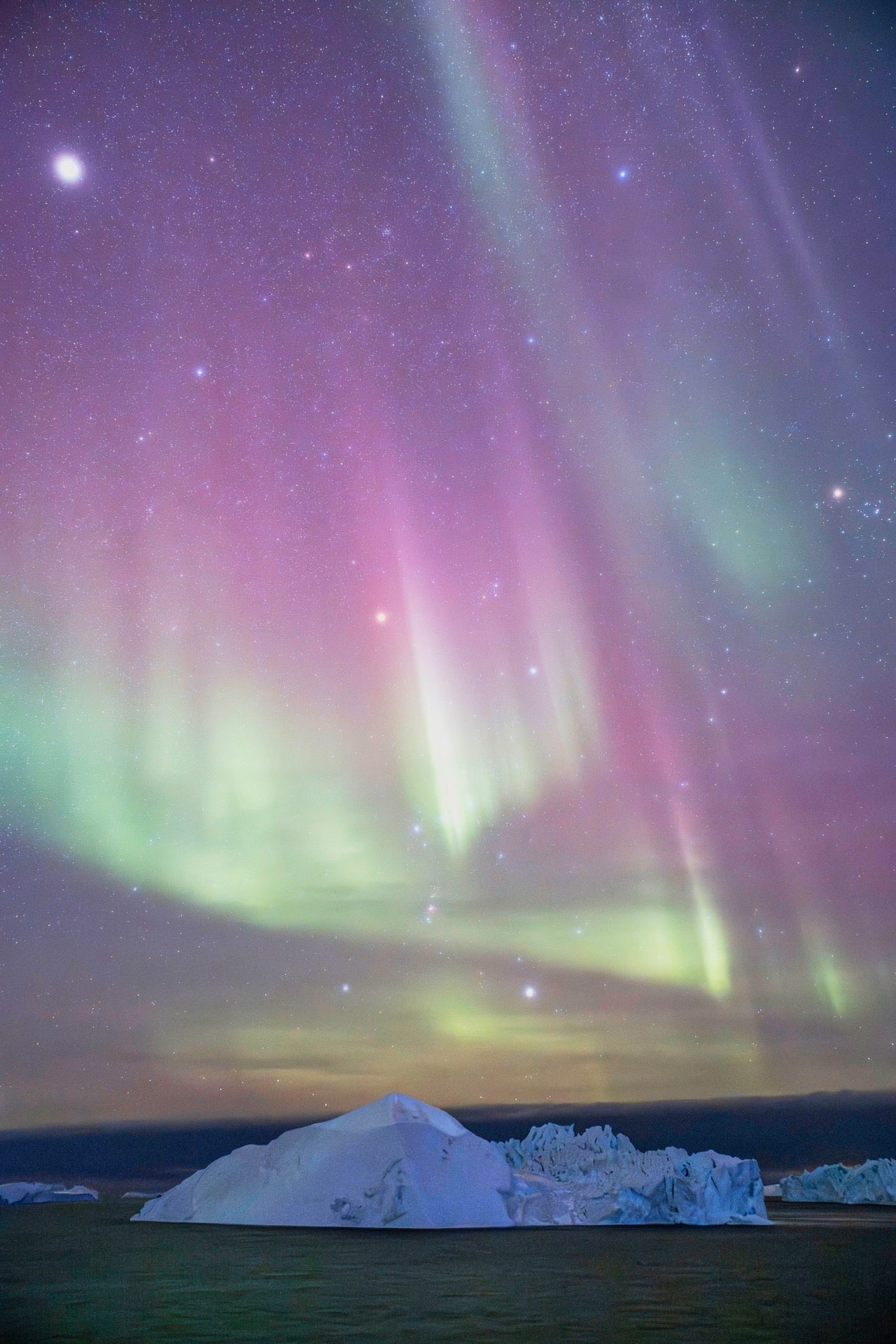
Photograph the icebergs at night under the Aurora by boat
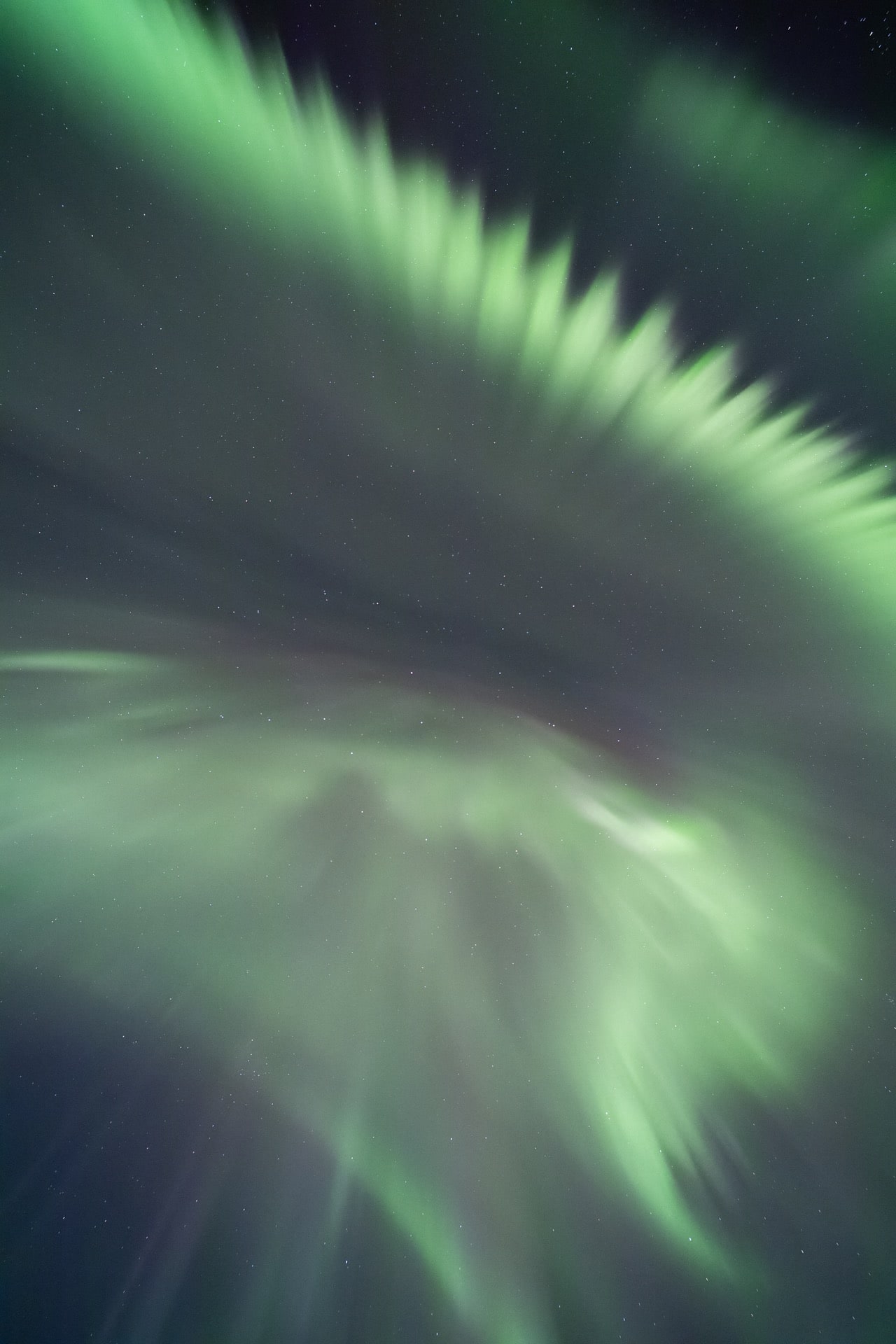
Aurora Borealis and Northern Lights
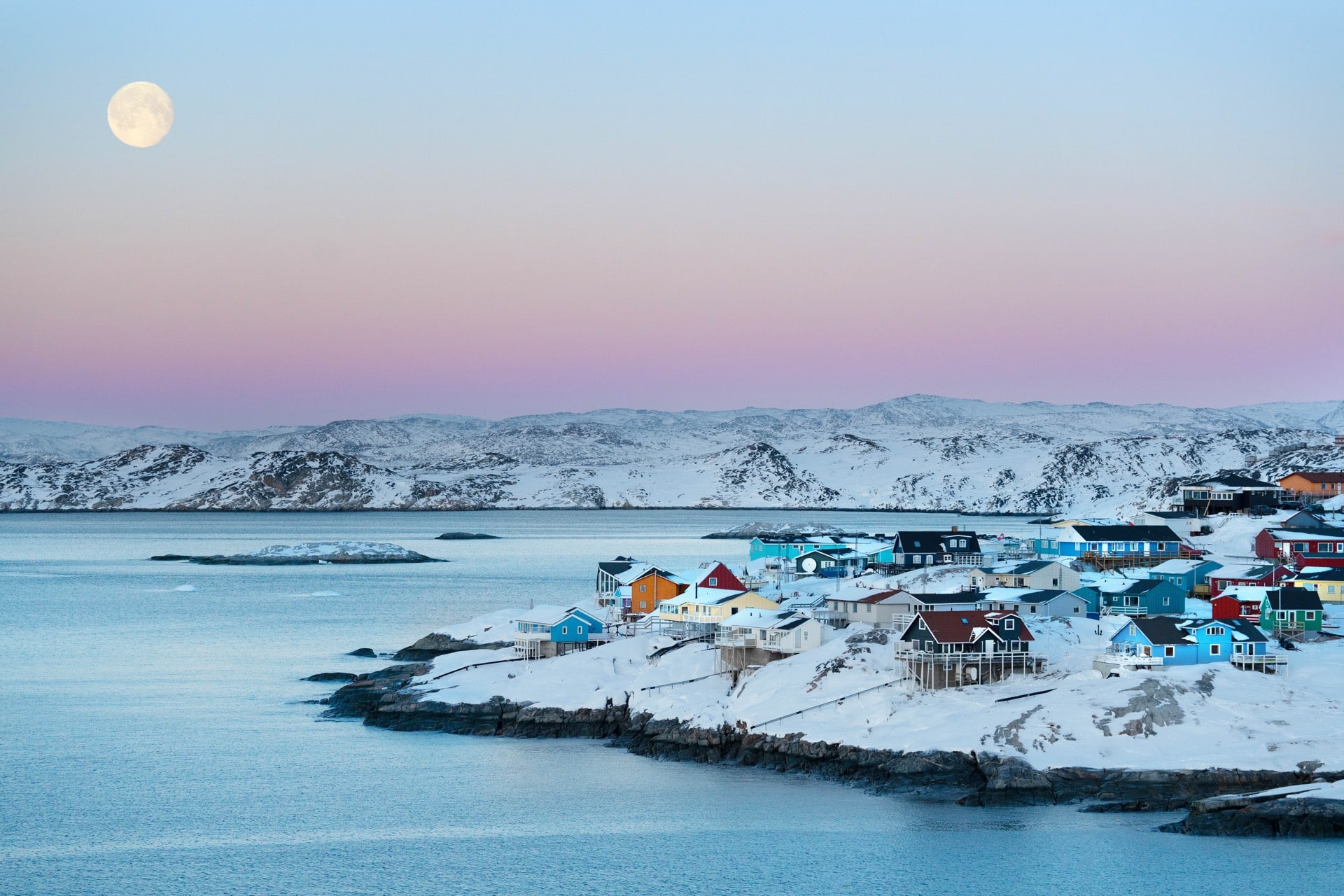
Frozen coastal landscape
Endless sculpted glacial ice
Iceberg nightscapes beneath Arctic stars
Ilulissat Quick Facts
A historic Arctic town built beside one of the most powerful glacier systems on Earth.
UNESCO World Heritage Site: The nearby Ilulissat Icefjord became a UNESCO World Heritage Site in 2004 due to its extraordinary glacial activity and scientific importance.
One of the fastest glaciers on Earth: The glacier feeding the fjord, Sermeq Kujalleq, moves up to 40 metres per day, producing an enormous number of icebergs that drift slowly into Disko Bay.
Birthplace of Knud Rasmussen: The famous Greenlandic-Danish polar explorer Knud Rasmussen was born here in 1879.
Third largest town in Greenland: With around 4,700 residents, Ilulissat is one of Greenland’s most important towns in the north.
Gateway to Disko Bay: The town sits on the edge of Disko Bay, an area famous for icebergs, whales and vast Arctic landscapes.
Travelling to Ilulissat
Compared with many Greenlandic settlements, Ilulissat is relatively easy to reach, making it one of the country’s most popular destinations.
Most travellers reach Ilulissat by flight from Kangerlussuaq or Nuuk, with regular domestic connections across Greenland.
For travellers visiting Greenland, Ilulissat is widely regarded as one of the best places to experience icebergs, Arctic landscapes and Northern Lights in a single destination.
The approach into Ilulissat is unforgettable. As the aircraft descends toward Disko Bay, the landscape begins to fill with icebergs scattered across the water like drifting white islands.
Even before landing it becomes clear why this region is considered one of the most spectacular glacial landscapes in the Arctic.
For further information about travelling in Greenland during winter, read How Easy is it to Travel Greenland in Winter?
Best Time of Year for Winter Conditions
Winter in Ilulissat brings darkness, ice filled seascapes and some of the best Northern Lights photography opportunities in Greenland.
December to January. Polar Night
During polar night the sun remains below the horizon, casting the town in long twilight for several weeks.
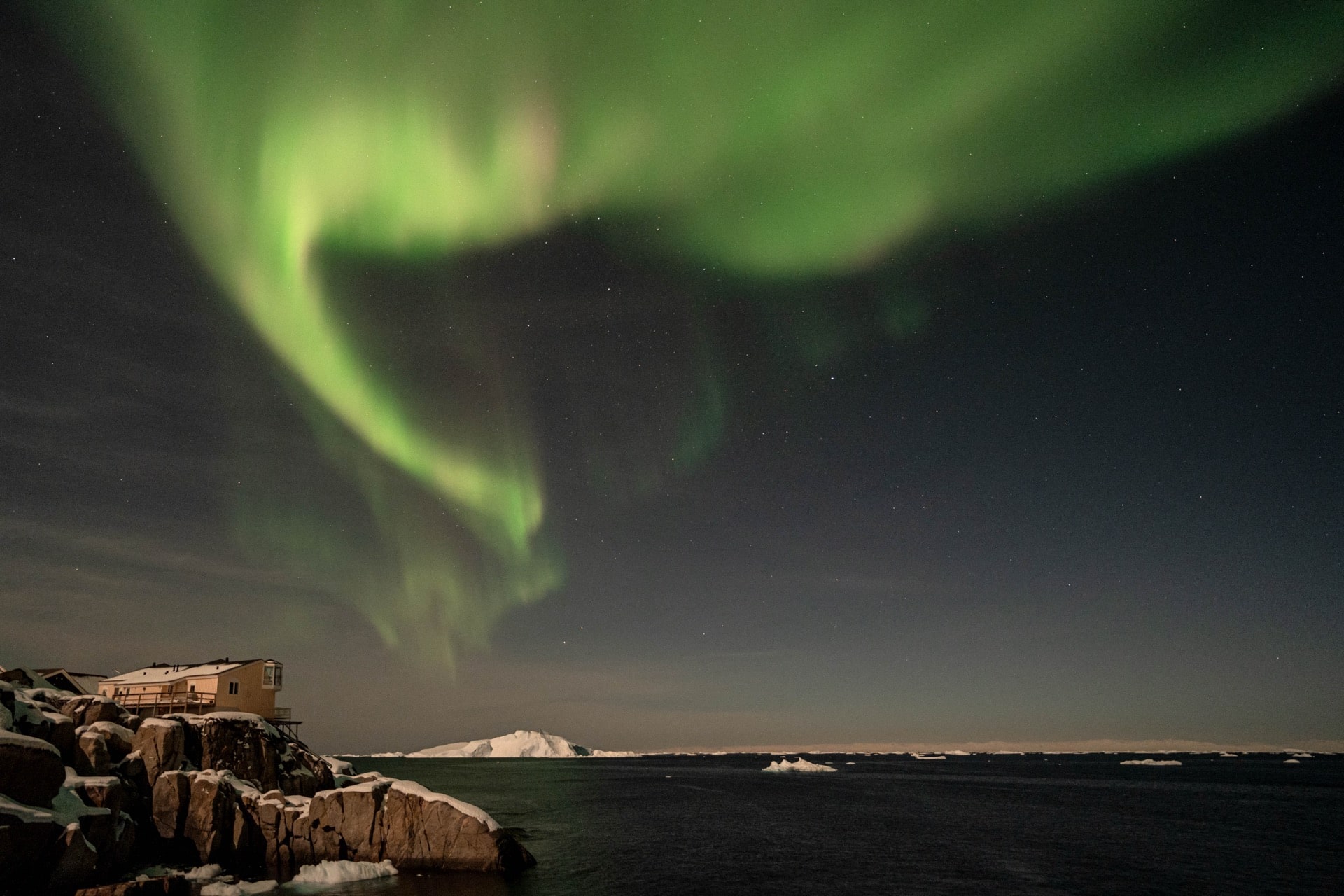
Although daylight is limited, the extended darkness provides excellent opportunities to photograph the Northern Lights (Aurora Borealis).
Ilulissat is widely considered one of the most easily accessible places to observe the Aurora in Greenland due to good flight connections. Skies darken out of the town along the trails and the dramatic iceberg Icefjord (Kangia).
Ilulissat is widely considered one of the most easily accessible places to observe the Aurora in Greenland due to good flight connections. Skies darken out of the town along the trails and the dramatic iceberg Icefjord (Kangia).
At the end of November, the sun only briefly touches the horizon for around 24 minutes on the 29th, and by the 30th it no longer rises above the horizon at all.
For more about this phenomenon see our article on Polar Night.
February to Early April. Prime Winter Conditions
For photographers this is the most rewarding winter period.
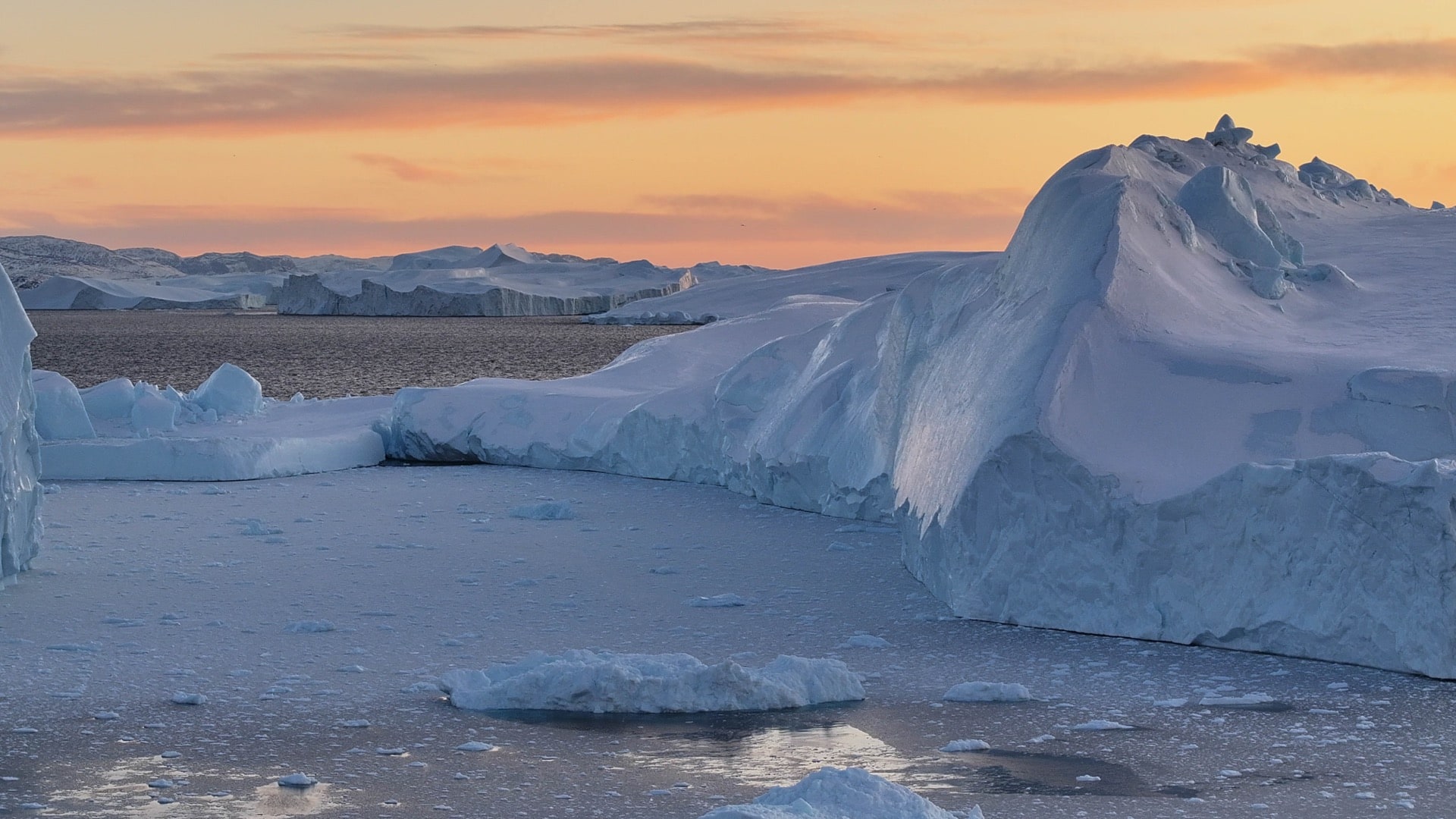
By February the sun has returned above the horizon, producing long hours of low Arctic light ideal for landscape photography.
Disko Bay often remains filled with icebergs throughout winter, creating dramatic scenes along the coastline and across the fjord.
This period combines
Increasing daylight with stunning low light in the February, early March
Strong Aurora Borealis activity
Potential for dog sledging, snowmobiles and winter activities
Longer days for exploring
Photographing Ilulissat in Winter
Few places on Earth produce icebergs on the scale seen here.
For photographers travelling through West Greenland, photographing Ilulissat is often one of the defining highlights of the journey.
The town sits beside the Ilulissat Icefjord, where enormous icebergs break away from the glacier and drift slowly toward Disko Bay.
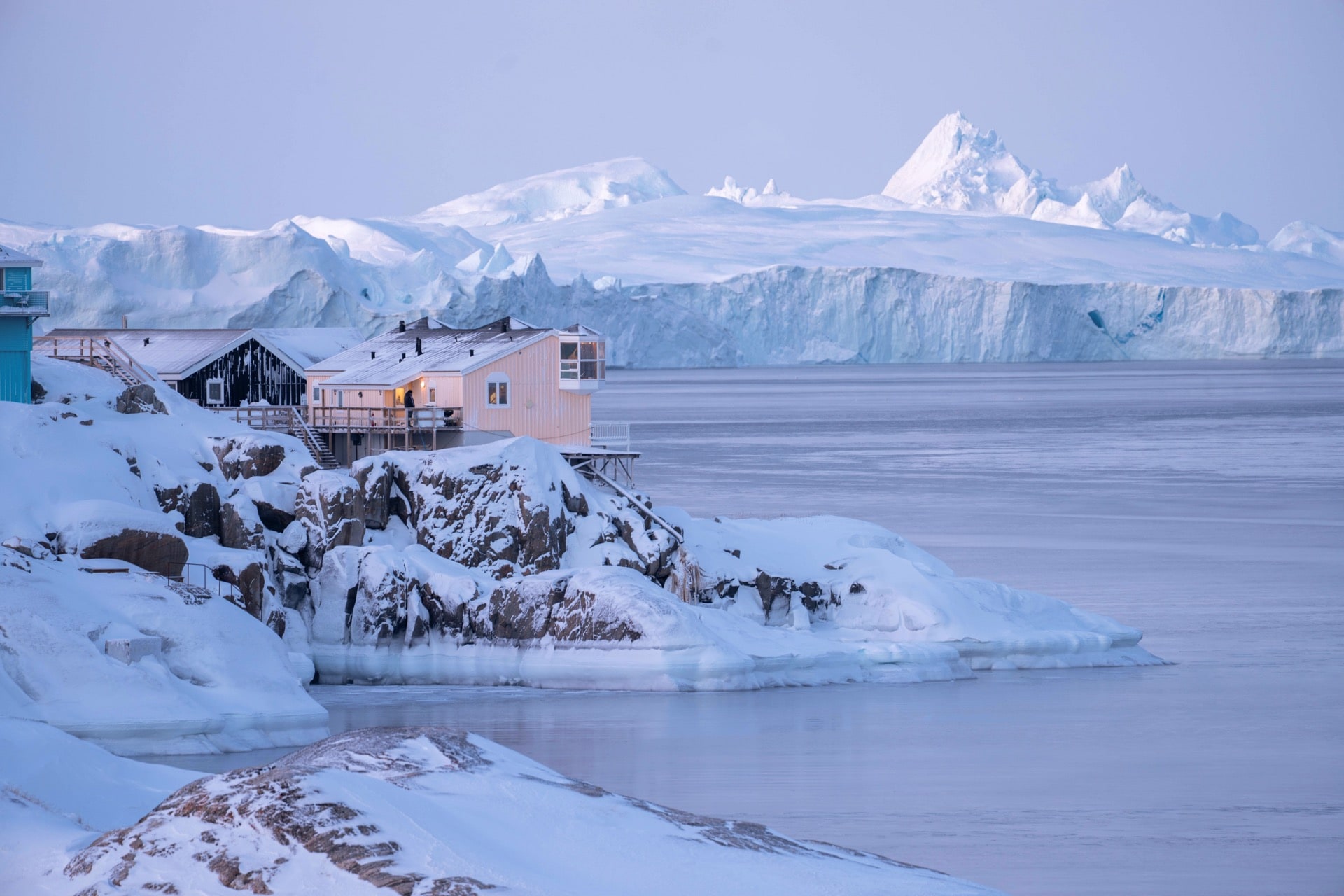
Standing along the coastline near the fjord, it is impossible not to feel the scale of the landscape. Icebergs drift silently through the dark Arctic water, some the size of city blocks, their surfaces glowing pale blue in the low winter sun. Every so often a deep crack echoes from within the fjord as another section of glacier shifts or calves.
For photographers the challenge is rarely finding a subject, but deciding which extraordinary scene to frame.
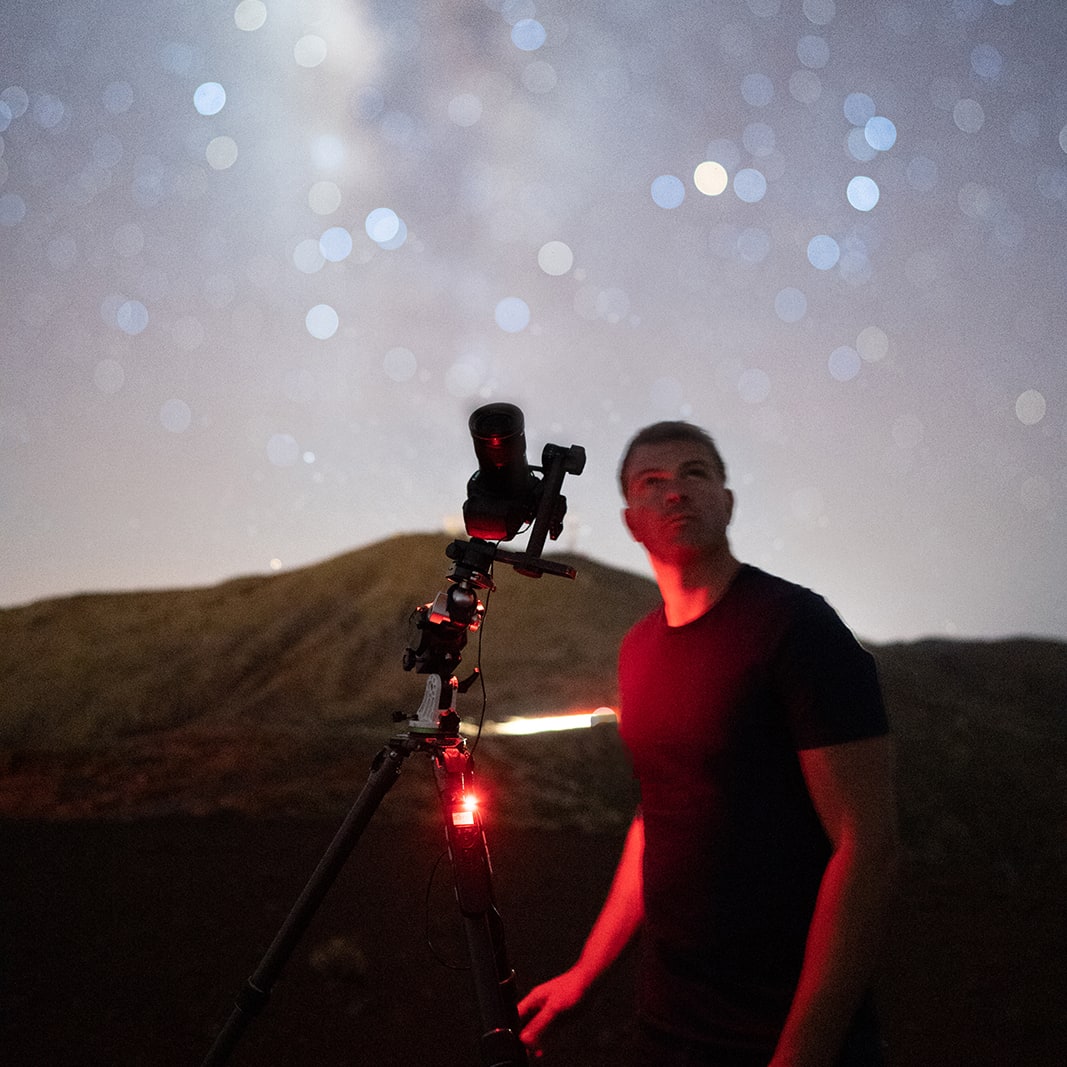
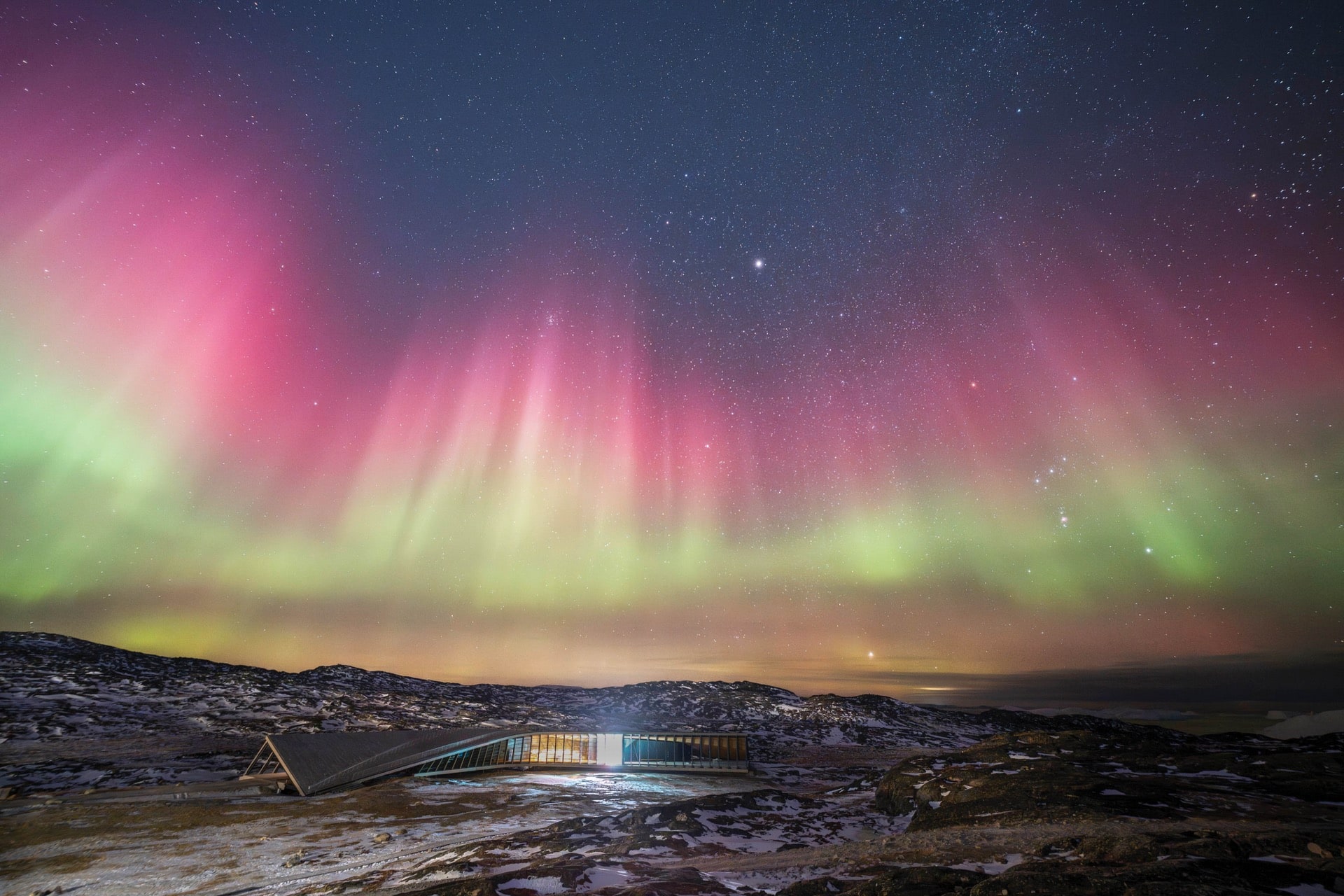
Photographing the Aurora Borealis above the Ilulissat Icefjord has become one of the most sought-after Arctic nightscape experiences, combining moving ice, star filled skies and the shifting ribbons of the Northern Lights.
Wind from Disko Bay can make temperatures feel significantly colder than the actual air temperature, so proper clothing is essential when spending long periods photographing along the coast.
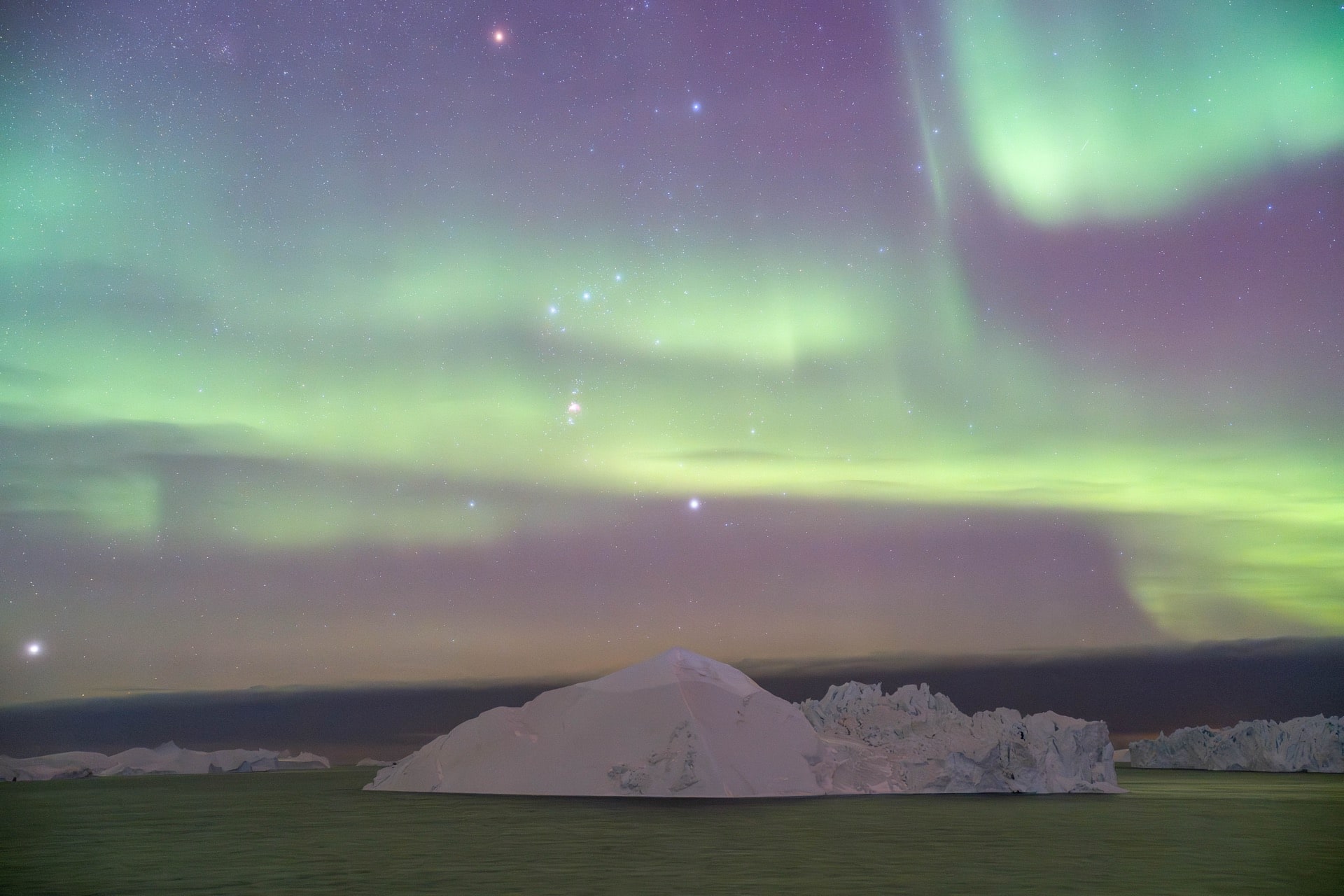
During clear winter nights the Aurora Borealis can appear above the Ilulissat Icefjord, illuminating the drifting icebergs with soft green light.
Photographing the Northern Lights in Ilulissat
Ilulissat offers exceptional opportunities for Northern Lights and aurora photography, particularly during the dark winter months.
The combination of minimal light pollution, clear Arctic skies and dramatic iceberg filled foregrounds makes the town one of Greenland’s most visually striking aurora locations.
On clear nights the Aurora Borealis often appears above Disko Bay and the Icefjord, sometimes reflecting faintly off snow and sea ice below.
For nightscape photographers, the ability to include enormous drifting icebergs beneath the aurora creates compositions rarely possible elsewhere in the Arctic.
Patience is often rewarded here. Some nights the aurora appears only briefly, with low activity appearing on the southern horizon early in the night due to Greenland’s axis and positions under the Auroral Oval. Stronger Aurora activity can see it dance overhead all night. the sky above Ilulissat can dance all night.
Best Photography Locations in Ilulissat
The town and surrounding coastline offer numerous vantage points for photographing the Icefjord.
Zion’s Church & Hospital Area
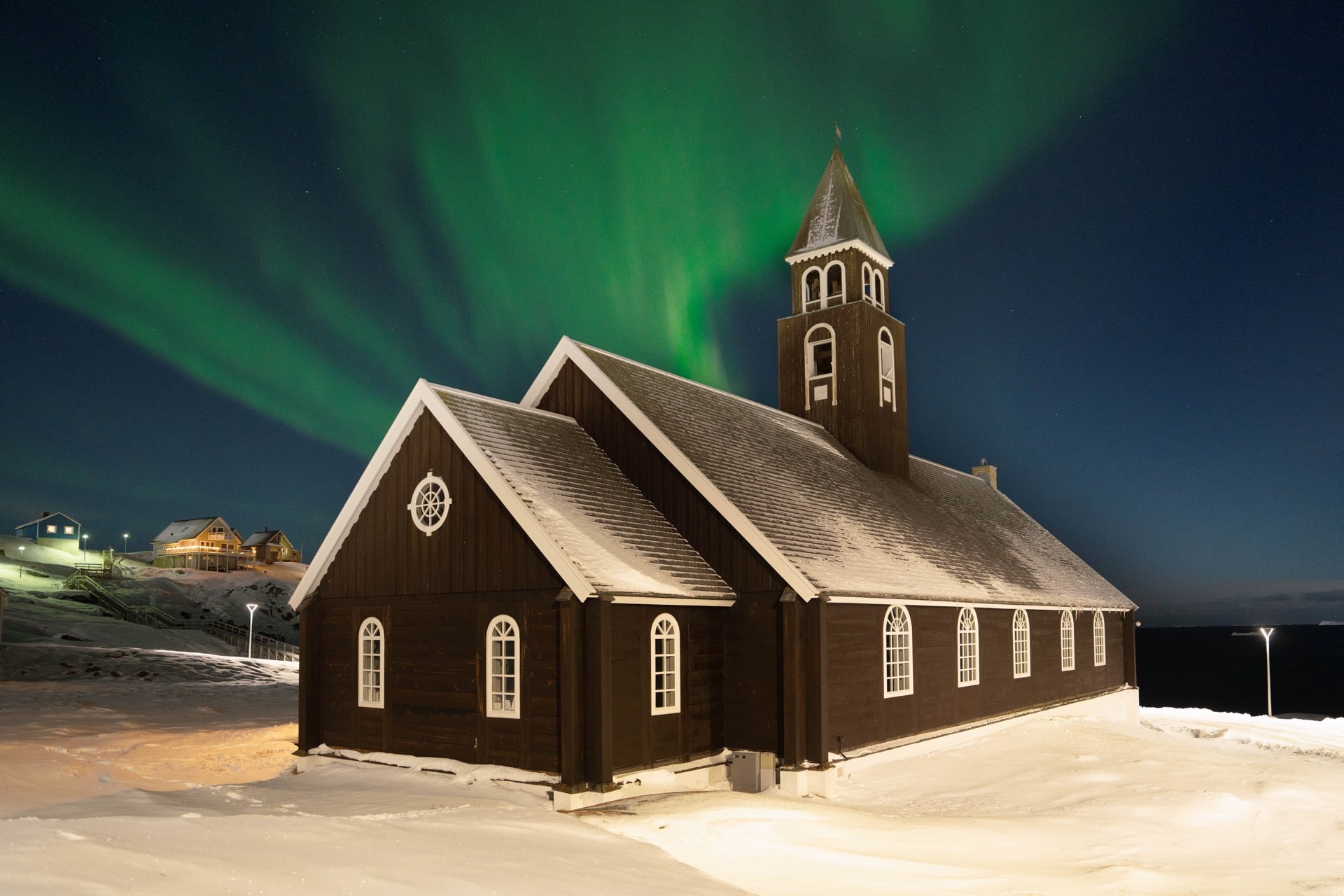
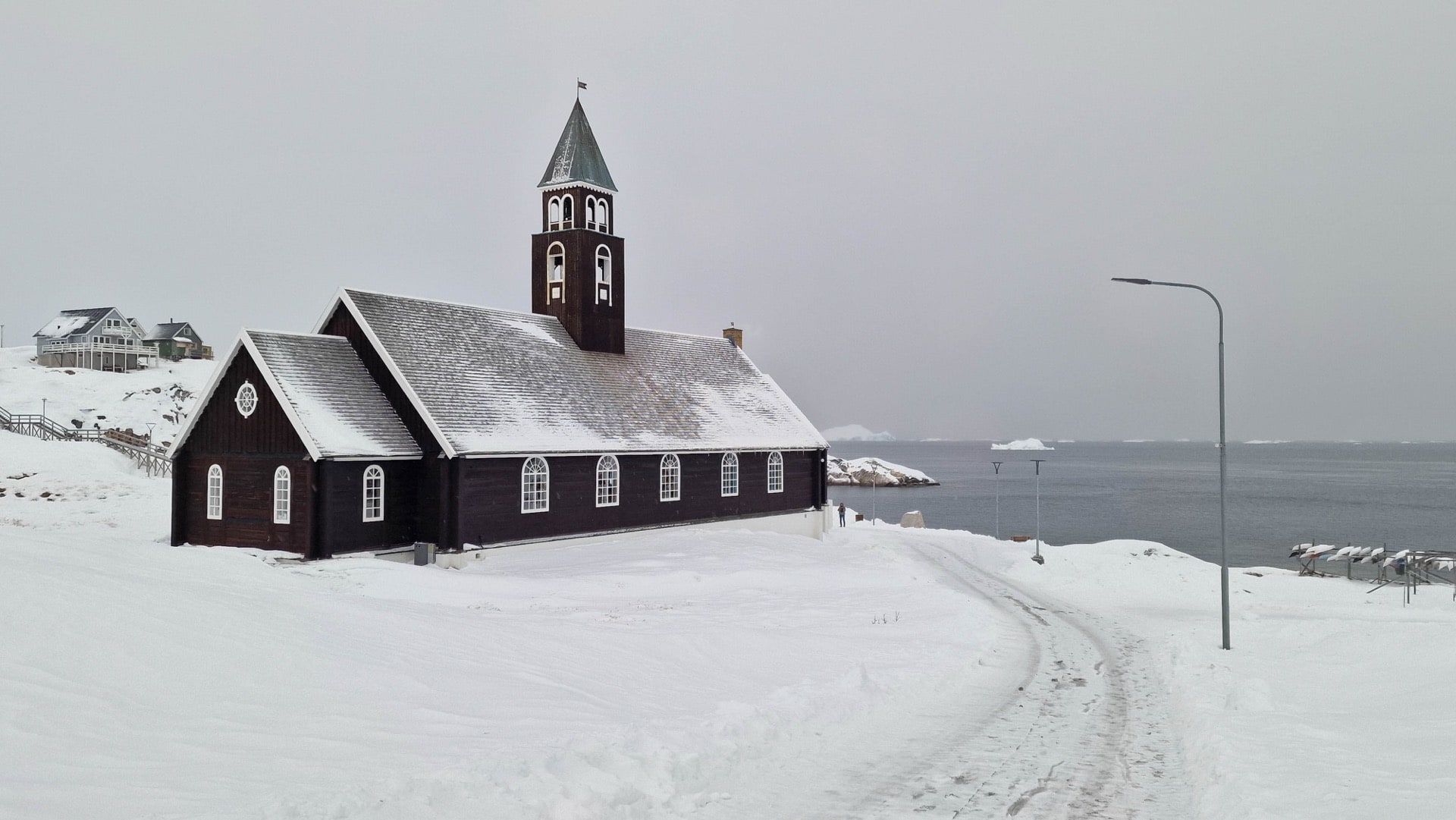
The views from around the hospital are incredible and it’s easy to frame Hotel Icefiord against t a magnificent backdrop of huge icebergs giving a sense of scale. Zion’s Church also provides a brilliant foreground that can often be framed with icebergs, used to break up the cityscape or winter scene, or photographed under the Aurora.
Sermermiut Valley
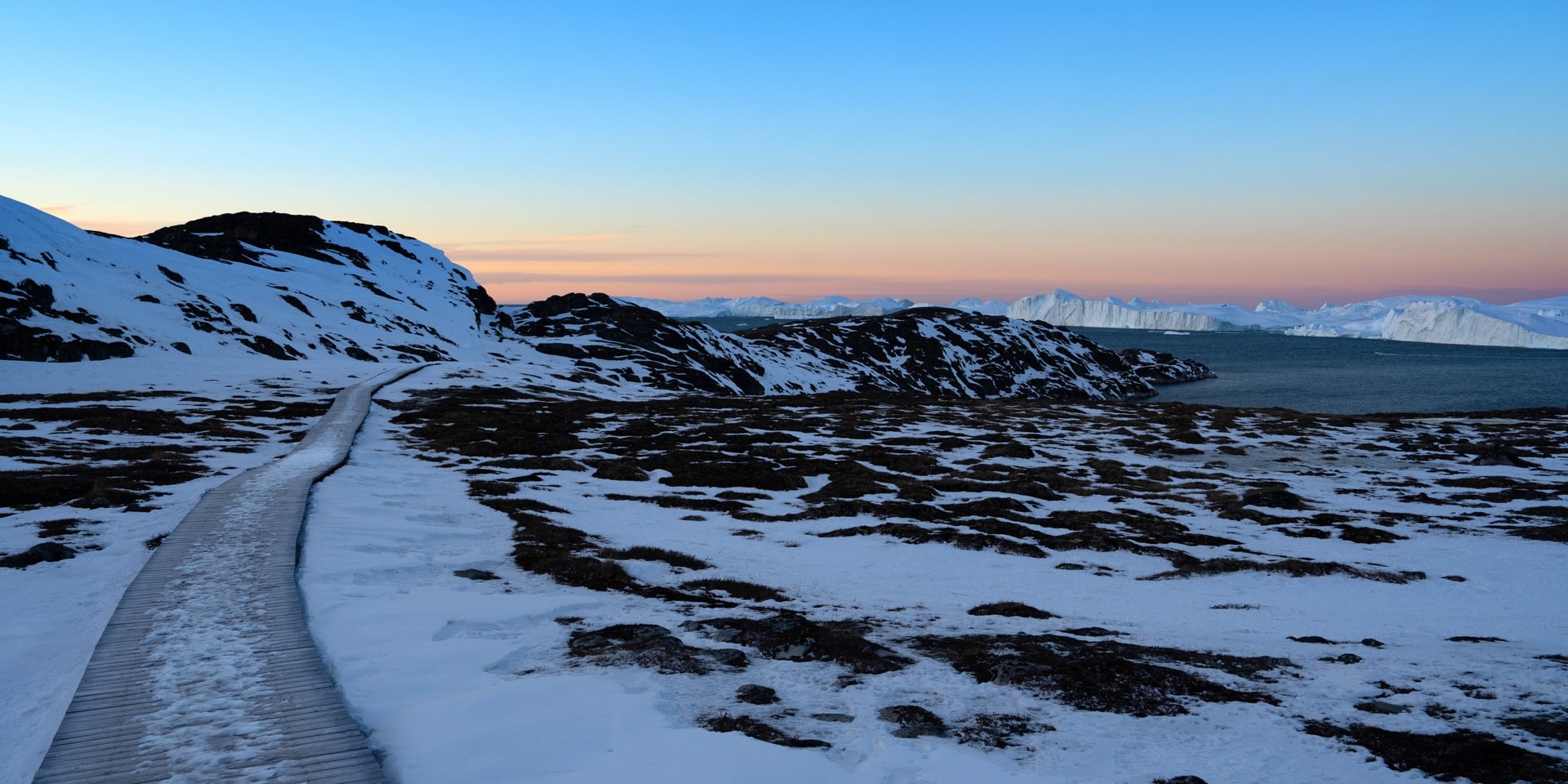
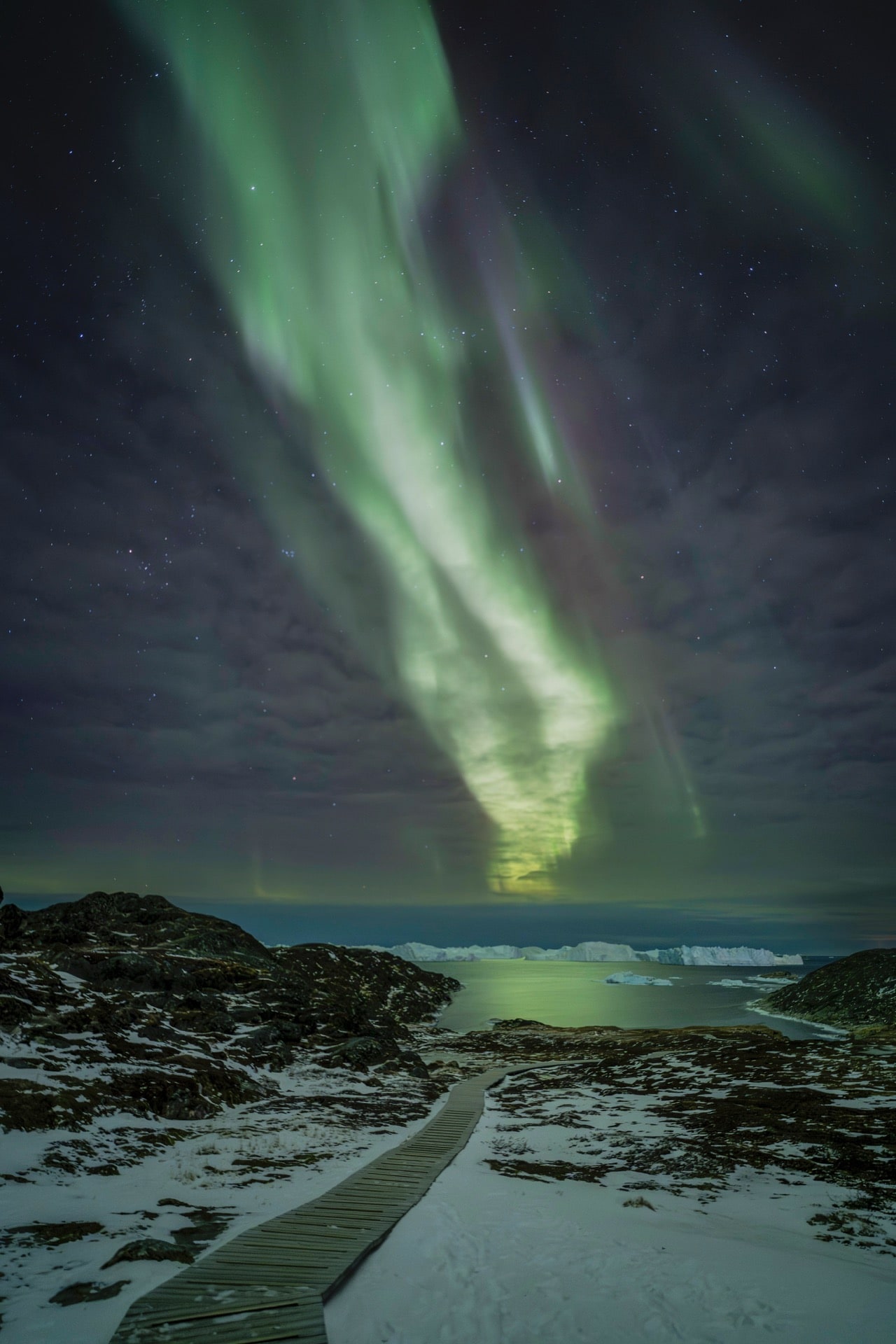
One of the most famous viewpoints overlooking the Ilulissat Icefjord, reached via boardwalk trails just outside town, access can be harder from midwinter, sometimes the walkway remains exposed, sometimes it’s under snow cover and may require snowshoes.
Ilulissat Icefjord Coastline
The shoreline near town provides views of icebergs drifting slowly toward Disko Bay, these can sometimes be framed with Ilulissat church (Zion’s Church).
Disko Bay Shoreline
Looking west across Disko Bay, this area often contains large icebergs moving out from the fjord.
Icefjord Centre
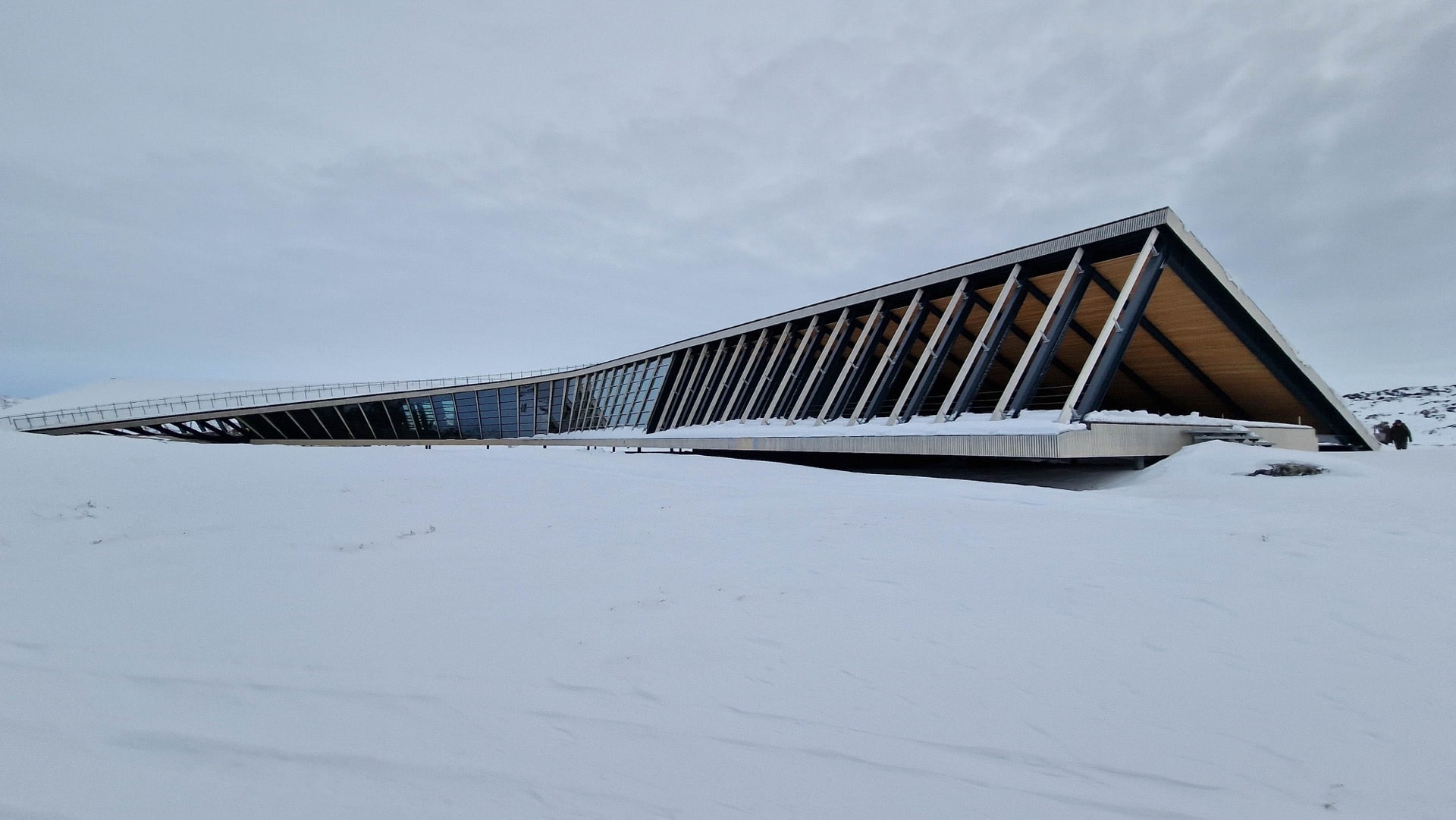
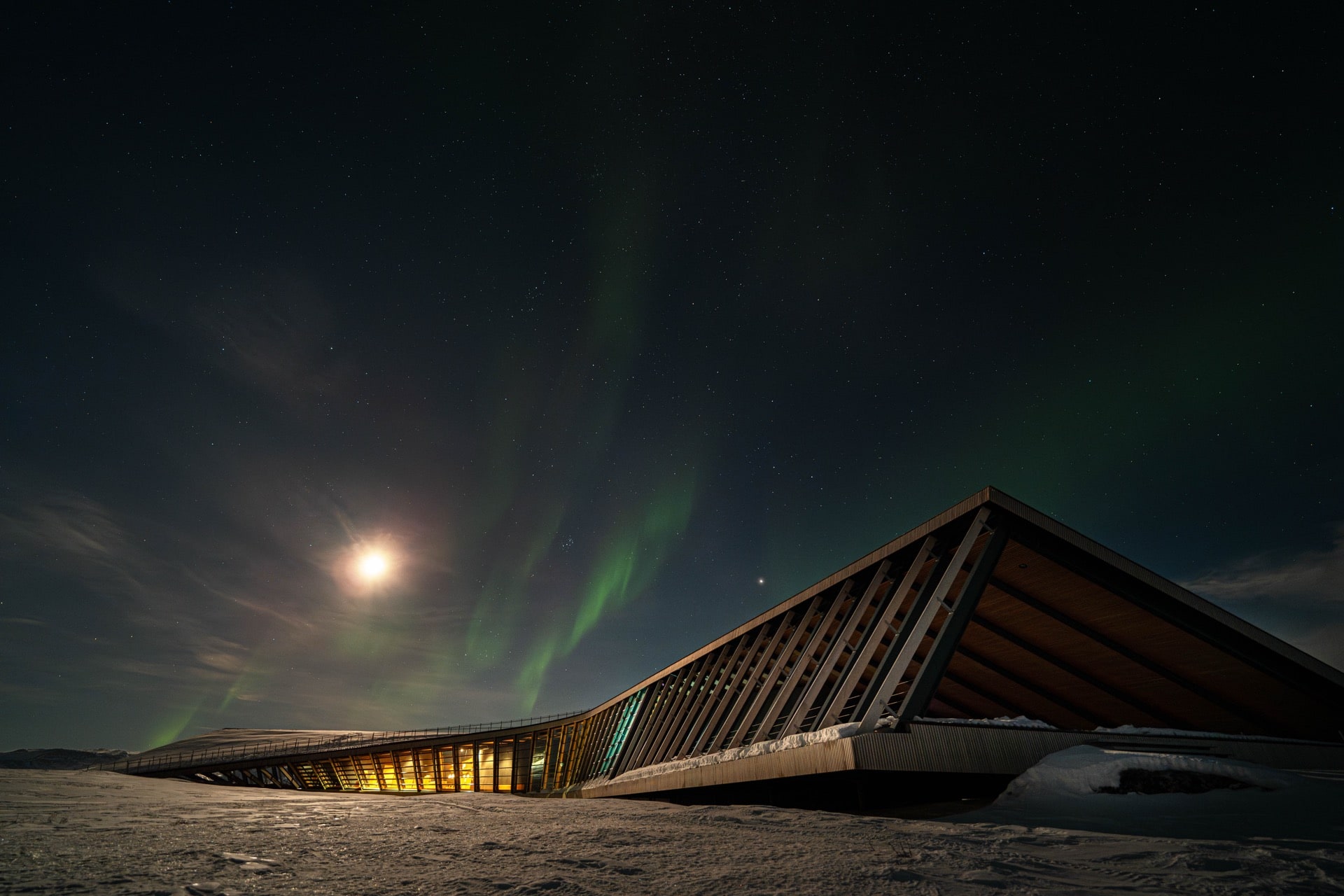
The Icefjord Centre by Dorte Mandrup provides epic angular curves and has an almost sci-fi feel while it nestles in the landscape whilst still remaining sympathetic to its surroundings at the entrance to the views of the UNESCO Icefjord.
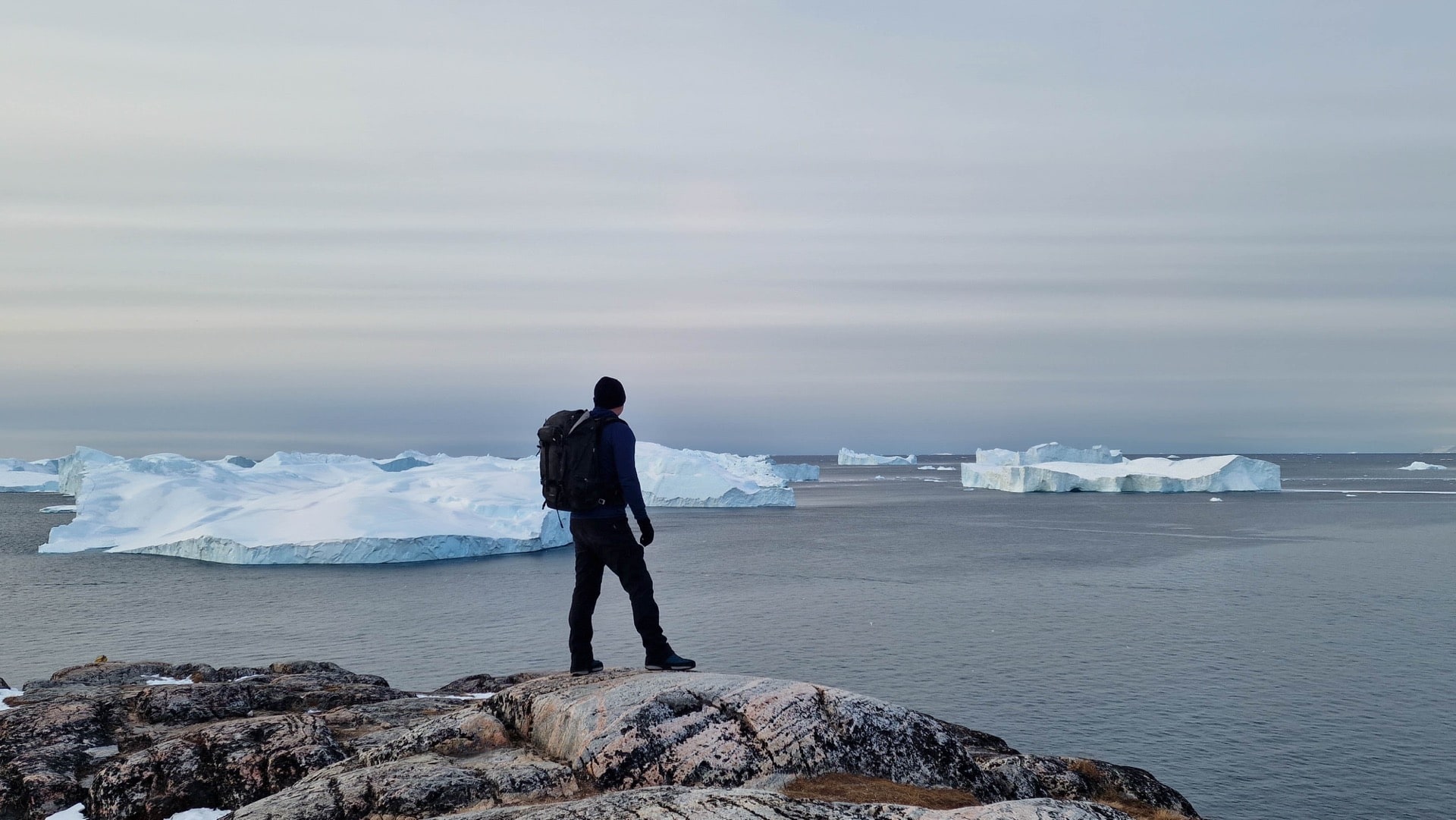
Yellow Trail and Night Photography Access
The Yellow Trail leading toward Sermermiut Valley is one of the most useful access routes for photographers wanting to view the Icefjord.
Near the start of the Yellow Trail, and also near the end of the trail where it approaches the Blue Trail, several viewpoints provide clear views across the fjord where large icebergs can often be seen even at night.
These locations can be excellent for Aurora Borealis photography above the Icefjord, particularly when drifting icebergs sit beneath the Northern Lights.
Winter conditions can vary significantly however.
Heavy snowfall may obscure parts of the trail and access points. In some months crampons or traction spikes are essential, and occasionally snowshoes may be required to safely reach the viewpoints.
Ilulissat Icefjord Centre
The Ilulissat Icefjord Centre sits just outside town beside the Icefjord landscape and serves as a gateway to the surrounding UNESCO World Heritage area.
The centre contains exhibitions explaining the science of the glacier, climate change in Greenland and the history of the Icefjord.
For photographers the surrounding terrain is particularly interesting.
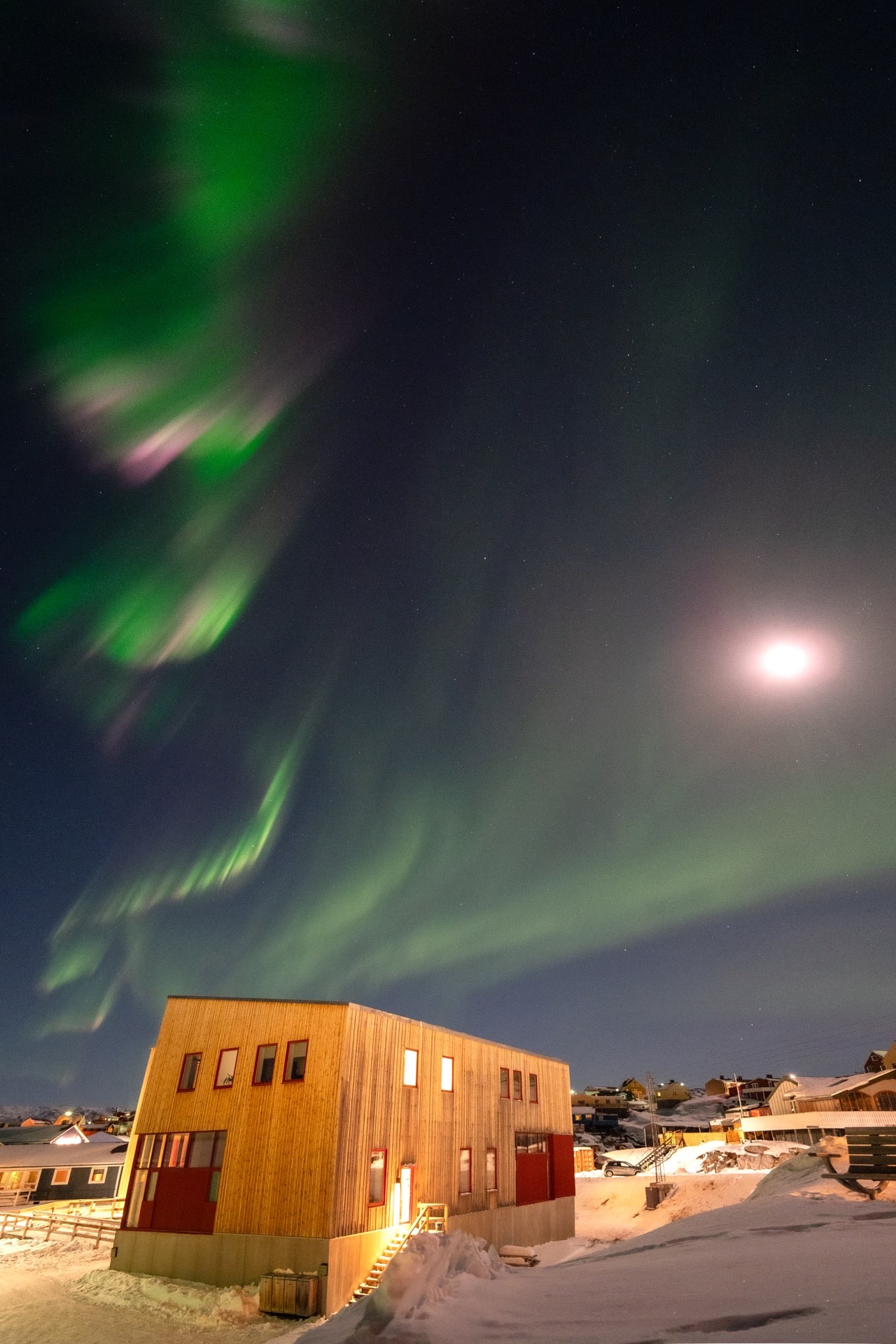
The open landscape around the Icefjord Centre provides excellent foregrounds for nightscape and aurora photography, with views across the fjord where icebergs drift slowly toward Disko Bay.
On clear winter nights the building itself can also be incorporated into compositions beneath aurora filled Arctic skies.
Getting Around Ilulissat
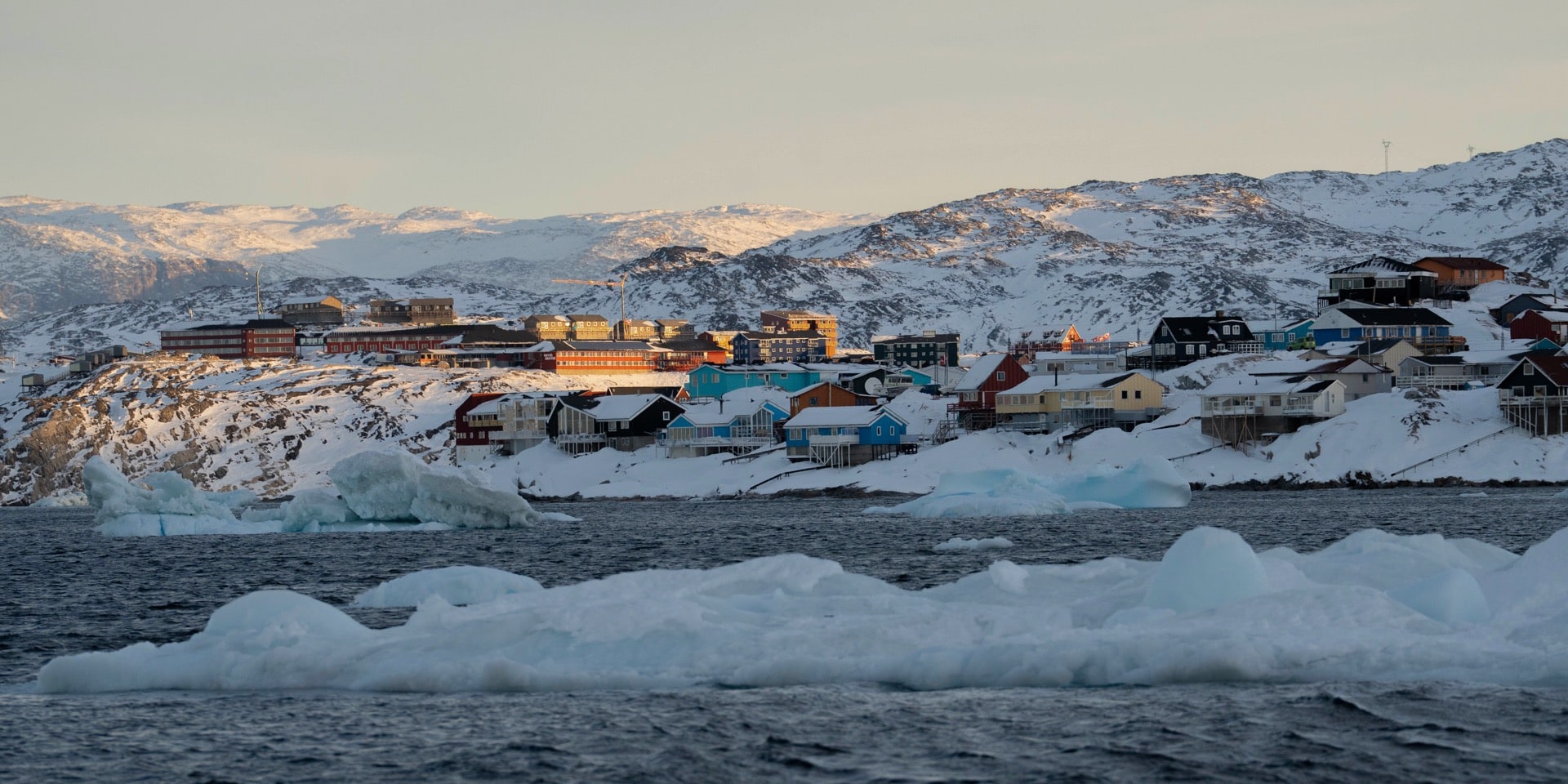
Despite its Arctic location, Ilulissat is a well-connected and walkable town.
Many visitors explore the centre and harbour on foot, as much of the town is concentrated around the waterfront.
Taxis are available and often used to reach trailheads or viewpoints slightly outside town.
Tour operators also run excursions to nearby locations such as Sermermiut Valley and the Ilulissat Icefjord viewpoints.
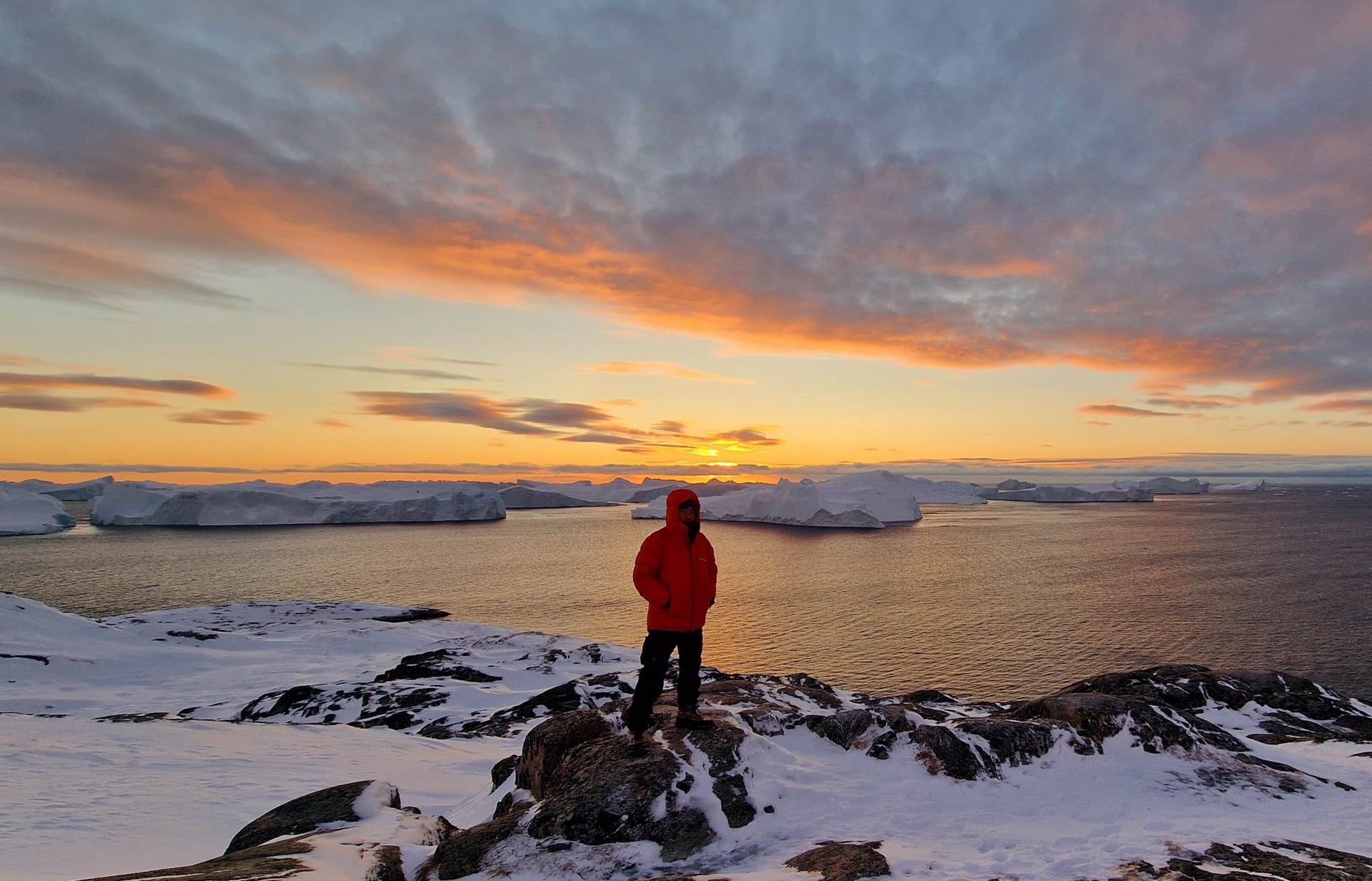
Climate Change and the Icefjord
Ilulissat sits beside one of the most closely studied glaciers in the world.
Sermeq Kujalleq is one of the fastest moving glaciers on Earth and has been studied by scientists for decades.
A shallow underwater moraine near the mouth of the fjord prevents the largest icebergs from immediately escaping into Disko Bay. This natural barrier causes many of the largest icebergs to accumulate inside the fjord, creating the dense iceberg landscape that makes Ilulissat famous.
Monitoring the Ilulissat Icefjord helps scientists understand how the Greenland Ice Sheet is responding to a warming climate.
Despite these changes, the fjord remains one of the most dramatic glacial landscapes on the planet.
Food in Ilulissat
Compared with many Greenlandic towns, Ilulissat offers a wider range of restaurants and cafés.
The town contains several supermarkets and restaurants serving both Greenlandic and international food.
Fresh fish, Arctic char and local seafood often appear on menus, reflecting the town’s strong fishing heritage.
Ilulissat Icefjord Facts
One of the most active glacial landscapes on Earth.
Massive glacier output
Sermeq Kujalleq produces more ice than almost any glacier outside Antarctica.
The icebergs leave Disko Bay and head north up the coast of Greenland taken by the current, before doing a U-turn, coming down the side of Canada through the Labrador Sea, and out into the Atlantic Ocean
Due to the aforementioned, it is probable that the iceberg that sank the Titanic, came from Sermeq Kujalleq.
Gigantic icebergs
Gigantic icebergs
Many icebergs leaving the fjord are among the largest found anywhere in Greenland.
UNESCO World Heritage Site
The Ilulissat Icefjord was designated a UNESCO World Heritage Site in 2004.
Continuous glacial movement
The glacier moves up to around 40 metres per day, constantly feeding ice into the fjord.
A Small Piece of Polar History
Ilulissat has long been connected to exploration in the Arctic.
The town is the birthplace of Knud Rasmussen, one of the most influential polar explorers in history.
His expeditions across Greenland and Arctic North America helped document Inuit culture and expand understanding of the Arctic world.
Today his childhood home in Ilulissat is preserved as a museum.
Arctic Photography Equipment
Extreme cold requires preparation.
The right clothing and camera gear make the difference between struggling in Arctic conditions and capturing extraordinary images.