TRAVEL ARTICLE
Northern Lights in Greenland
ARTICLE BY OLLIE TAYLOR ON 24 May 2026

ARTICLE INDEX
Photographing the Northern Lights in Greenland
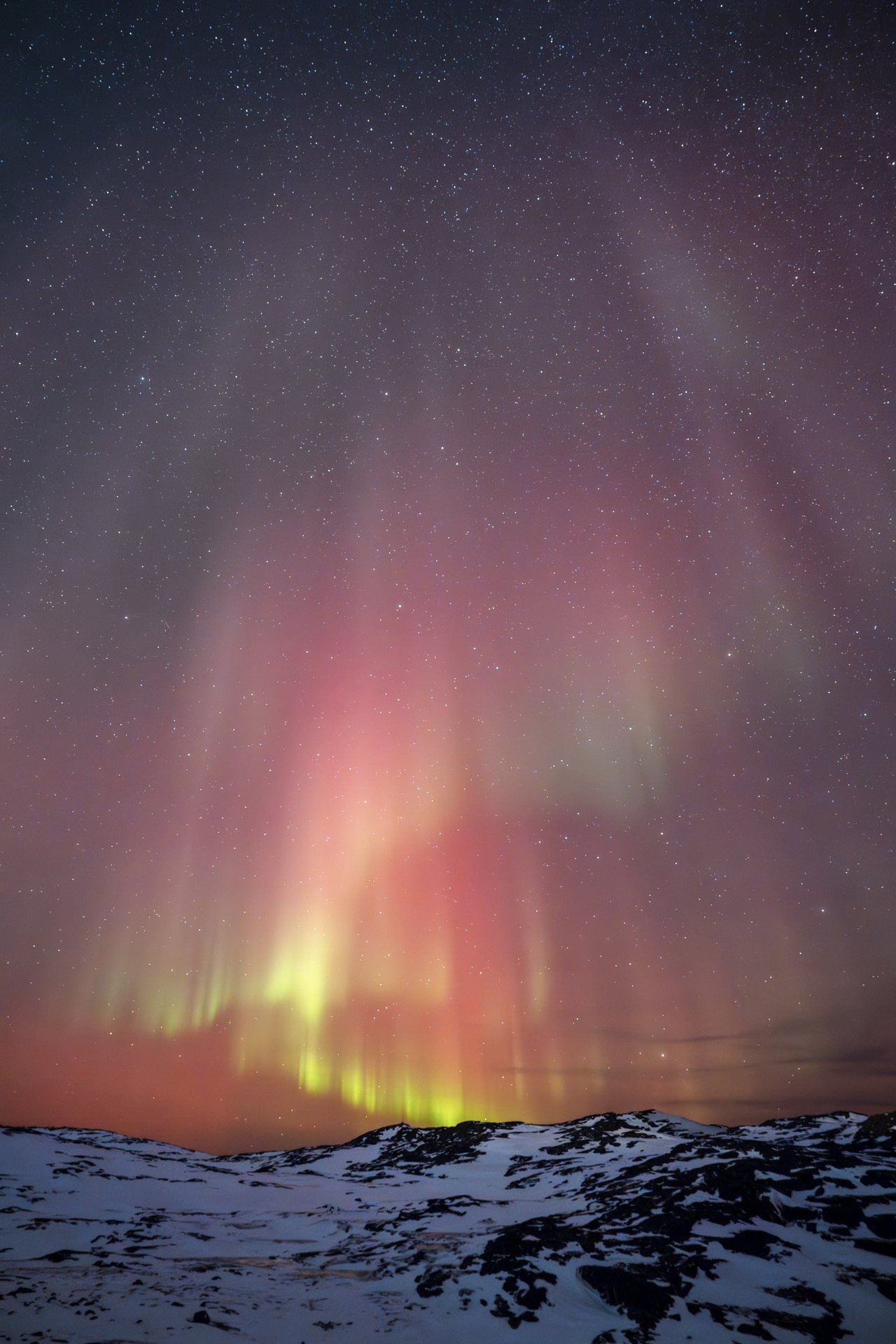
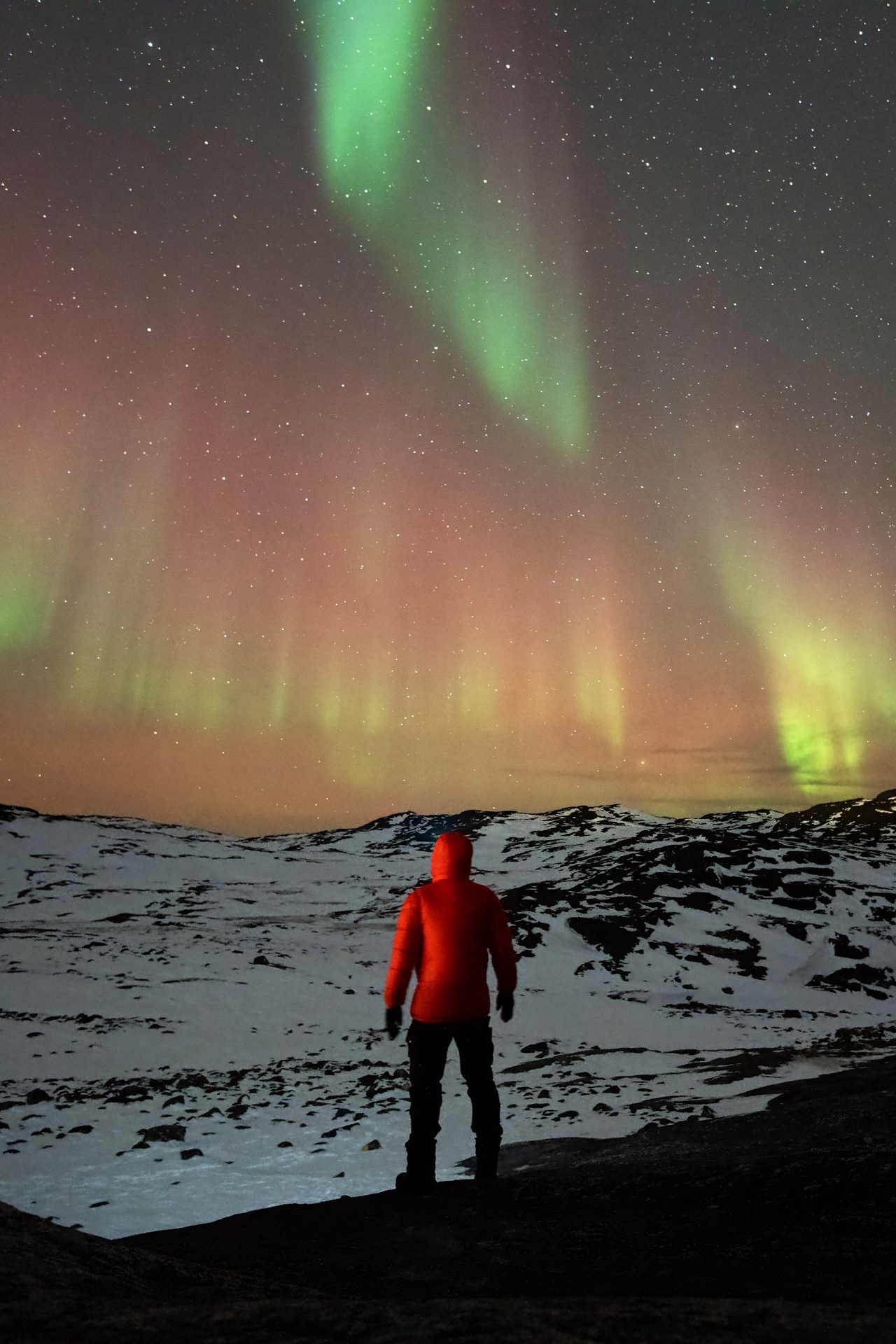
Few places offer a more dramatic setting for photographing the Northern Lights than Greenland. During the long Arctic winter, vast stretches of the country sit beneath dark skies where the Aurora Borealis regularly appears above fjords, mountains and frozen coastlines.
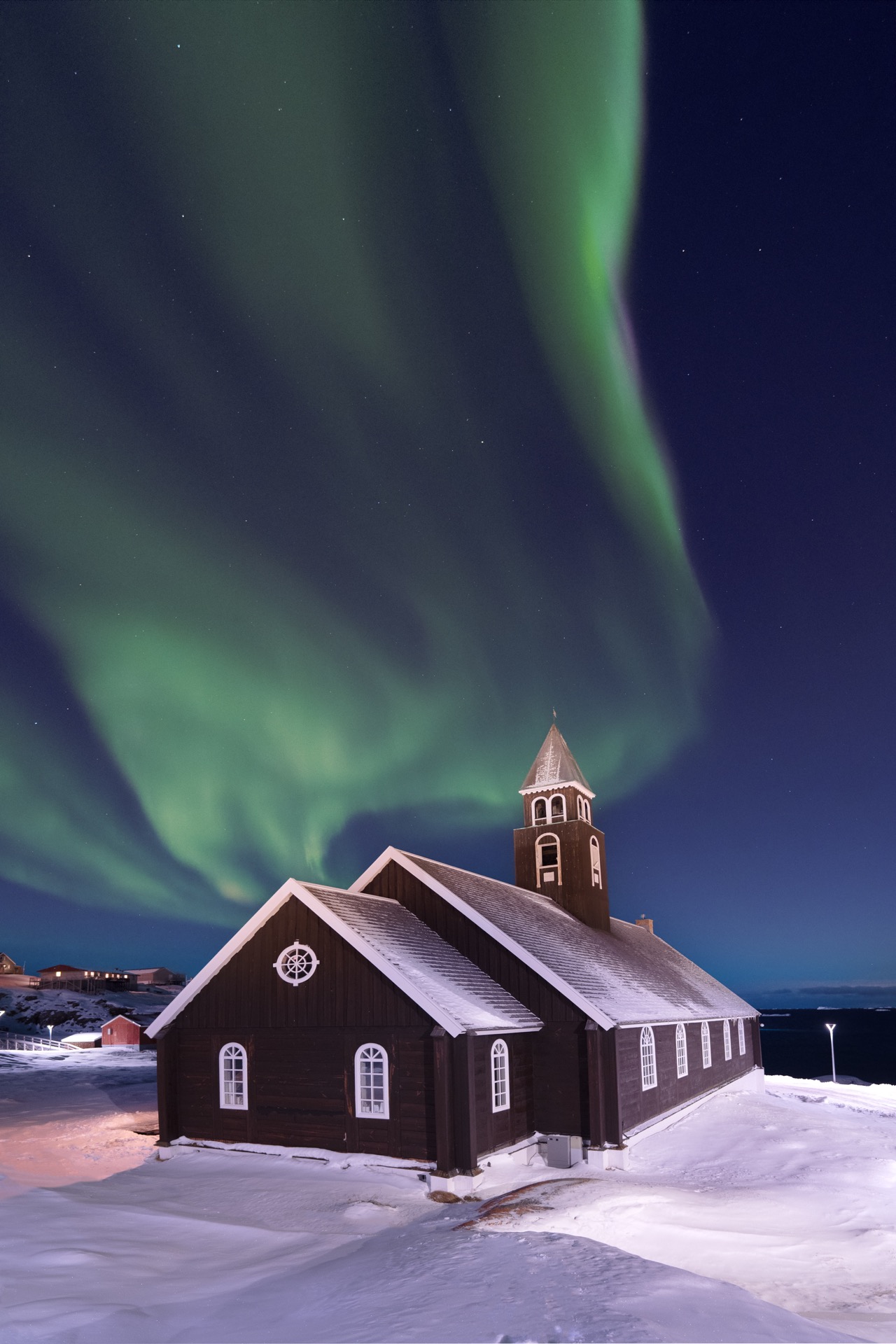
One slightly restrictive difference with Greenland is there is no road network outside most of the town, so Aurora images are often created by using the urban environment within the image.
Despite this, light pollution across Greenland remains extremely low. Even the larger towns are surrounded by vast areas of of Arctic wilderness and therefore darkness, and many settlements do have some roads, trails or a lake in the case of Uummannaq, leading away from the glow of artificial light, allowing photographers to reach darker viewpoints within a short distance.
Across West Greenland, locations such as Uummannaq, Ilulissat, Nuuk and Sisimiut offer excellent opportunities to photograph the aurora above dramatic Arctic landscapes.
Read one of our favourite Greenland articles, The Magic of Uummannaq here.
Key Fact
In West Greenland the Northern Lights season typically runs from mid-September to early April, when long Arctic nights provide the best viewing conditions.
Southern Greenland, including areas around Nuuk, lies close to the centre of the auroral oval, where the Northern Lights often appear high overhead.
Further north, in places such as Ilulissat and Uummannaq, the aurora frequently begins low on the southern horizon before expanding across the sky as activity strengthens.
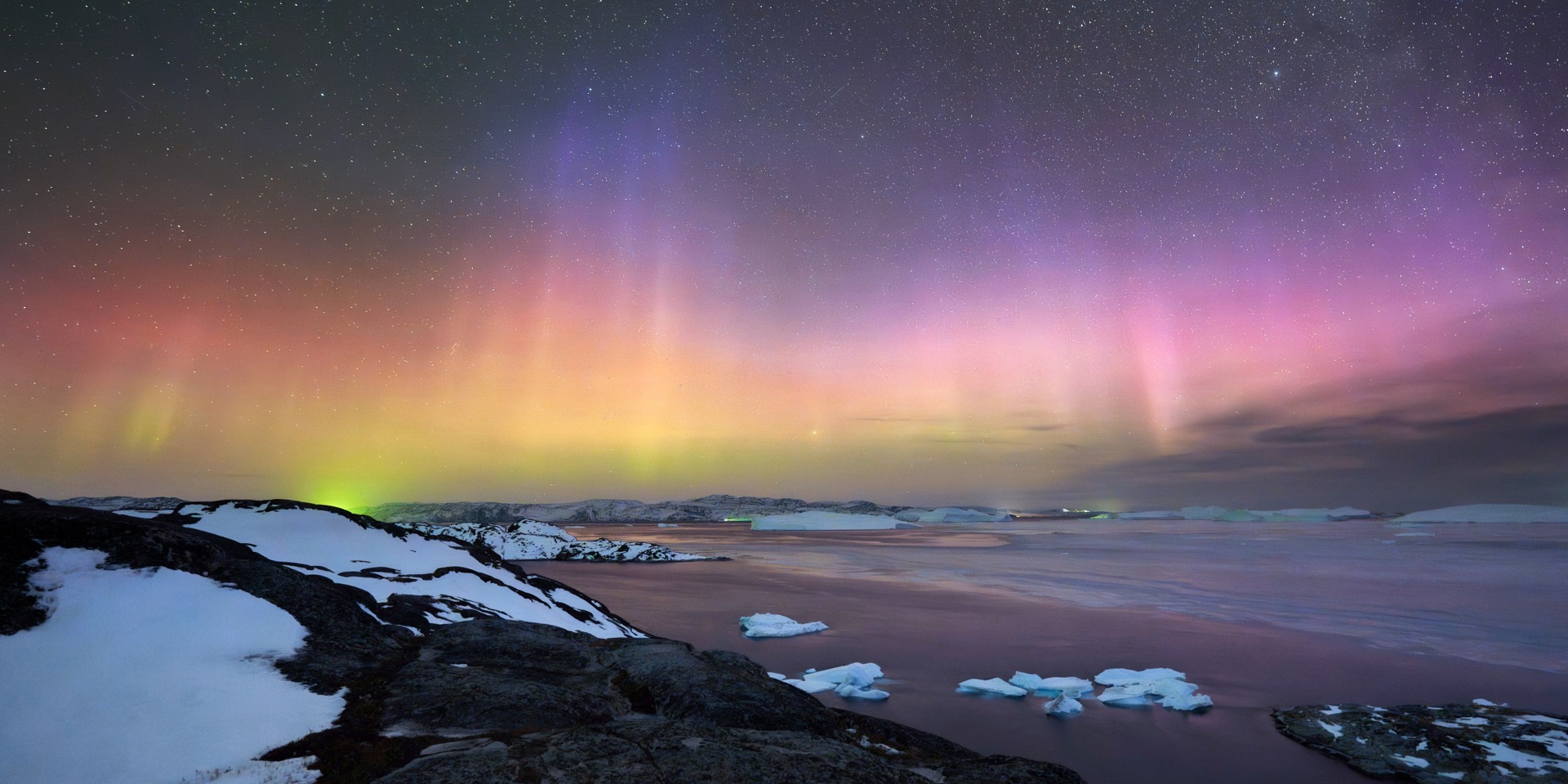
Greenland is one of the very few places in the world where photographers can capture the Aurora Borealis above enormous drifting icebergs, particularly around the Ilulissat Icefjord.
On strong aurora nights, the green glow can sometimes reflect faintly from the snow-covered faces of large icebergs, adding subtle colour to the frozen landscape below.
Best Months for Northern Lights in Greenland
In West Greenland the best period for Northern Lights photography typically runs from mid-September through to early April, when long nights and clear Arctic skies provide the greatest opportunity for auroral activity.
Weather also plays an important role. While Iceland is one of the most famous Northern Lights destinations in the North Atlantic, it lies directly in the path of frequent Atlantic storm systems. Parts of West Greenland often experience longer periods of cold, stable winter weather, increasing the chances of clear skies for aurora photography.
It could be argued that late November to mid-January are the best months for Northern lights in West Greenland due to polar nights and short days.
Photographing Ilulissat in Winter
Although Greenland is widely known for the Northern Lights, different parts of the country sit in slightly different positions relative to the auroral oval.
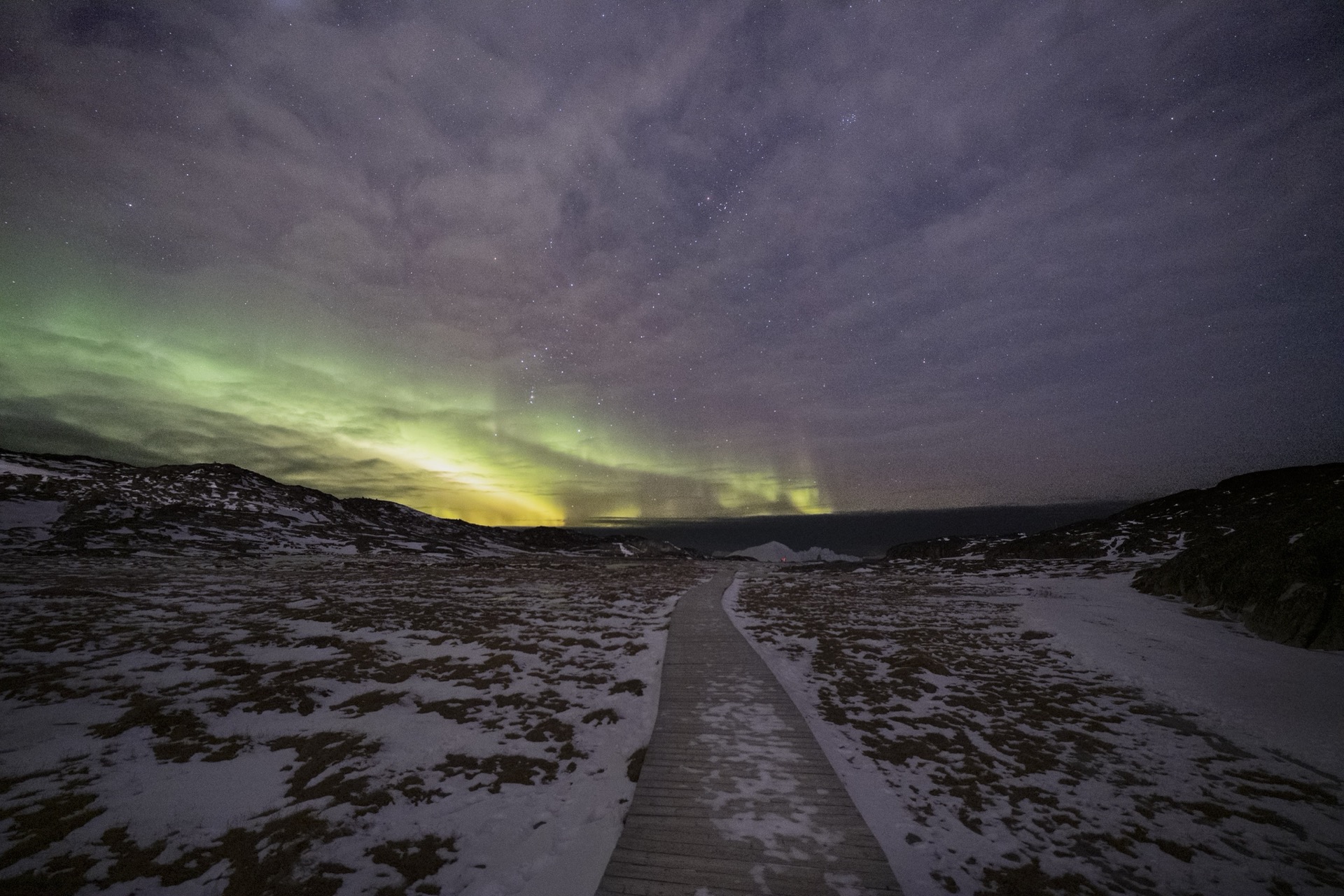
Further north, in places such as Ilulissat and Uummannaq, the towns sit slightly north of the oval’s central band. When aurora activity begins building, the lights often first appear low along the southern horizon before expanding higher into the sky.
For photographers this can actually work in their favour. In several locations around Ilulissat, including coastal viewpoints open up to the south across the fjord. As the aurora rises from the southern horizon, it naturally forms a balanced composition above the landscape and ice-filled waters of the fjord.

Where Greenland Becomes Unique
Another feature that makes West Greenland particularly special for aurora photography is the presence of enormous icebergs drifting through coastal fjords.
In places such as Ilulissat Icefjord, the Northern Lights can sometimes appear above towering blocks of glacial ice moving slowly through the water. There are very few places in the world where photographers can capture the aurora above icebergs of this scale, combining two of the Arctic’s most dramatic natural phenomena in a single frame.
In places such as Ilulissat Icefjord, the Northern Lights can sometimes appear above towering blocks of glacial ice moving slowly through the water. There are very few places in the world where photographers can capture the aurora above icebergs of this scale, combining two of the Arctic’s most dramatic natural phenomena in a single frame.